Global Tensions Escalate as January 2026 Concludes with Major Geopolitical Shifts
The final week of January 2026 has witnessed a dramatic escalation in global tensions, marked by three significant developments that are reshaping international relations. From the looming threat of a US-Iran military confrontation in West Asia to the historic signing of a free trade agreement between India and the European Union, and China's surprising purge of a top military general, the world is navigating a complex geopolitical landscape.
Iran Braces for Potential US Invasion as Naval Armada Approaches
The situation in Iran remains critically tense following the massive anti-government protests that erupted earlier in January. While the Ayatollah's regime managed to suppress the uprising through a brutal crackdown that resulted in thousands of casualties, a new and potentially greater threat has emerged on the horizon.
US Military Buildup Near Iranian Waters

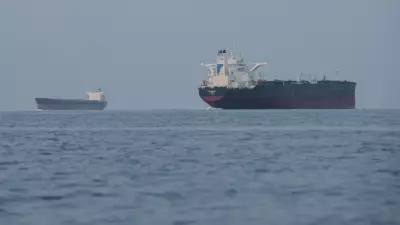
Last week, US President Donald Trump announced the deployment of what he called a "beautiful armada" toward Iran. This refers specifically to the USS Abraham Lincoln aircraft carrier strike group, a formidable naval force that includes the nuclear-powered supercarrier accompanied by three guided-missile destroyers. The strike group has turned off its Automatic Identification System to conceal its exact location, adding to the uncertainty surrounding its movements.
The USS Abraham Lincoln represents significant military power with its capacity to accommodate approximately 5,680 personnel and carry up to 90 aircraft, including advanced fighter jets and surveillance planes. This deployment has created genuine concern among analysts who believe a US military intervention in Iran is increasingly likely, though the exact timing remains uncertain.
Iran's Preparedness and Response Strategy
Iranian authorities are taking the threat seriously, with both the government and the Islamic Revolutionary Guard Corps preparing for what they view as an inevitable confrontation. President Masoud Pezeshkian has reportedly delegated some governance responsibilities to regional governors as part of contingency planning.
Given the conventional military imbalance between Iran and the United States, Iranian forces are reportedly relying on asymmetric warfare capabilities, particularly their battle-tested kamikaze drones and UAVs that have seen action in various global conflicts. Iran has vowed to retaliate with "everlasting consequences" against the US and its regional allies should military action occur.
Potential US Military Objectives in Iran
Military analysts suggest several possible scenarios for US action, ranging from targeted decapitation strikes against Iran's top leadership to broader operations aimed at dismantling what remains of Iran's nuclear program following last year's strikes. Some experts believe the military buildup could serve as a pressure tactic to encourage renewed protests against the Iranian government, while others anticipate more direct military engagement.
India and European Union Seal Historic Free Trade Agreement
In a significant development for global trade, India and the European Union signed a landmark Free Trade Agreement on January 27, 2026, just one day after India celebrated its 77th Republic Day. European Commission President Ursula von der Leyen described the agreement as the "mother of all deals," highlighting its importance after nearly two decades of negotiations.
Scope and Impact of the India-EU FTA
This agreement creates one of the world's largest free-trade zones, encompassing approximately 2 billion people and representing about 25 percent of global GDP. The comprehensive deal must now undergo ratification by the European Parliament and all 27 EU member states, with full implementation expected by early 2027.
Once operational, the FTA will eliminate or significantly reduce tariffs on a wide range of goods and services. The European Union will remove tariffs on 99.5 percent of Indian exports, while India will eliminate or reduce duties on 96.6 percent of EU exports.
Key Benefits for Consumers and Industries
European goods that will become more affordable in India include:

- Luxury cars (above Rs 16 lakh for up to 250,000 vehicles annually)
- Wine (tariffs reduced from 150 percent to 20-30 percent)
- Spirits (tariffs reduced from 150 percent to 40 percent)
- Beer (tariffs reduced from 110 percent to 50 percent)
- Processed foods (tariffs eliminated from 50 percent to 0 percent)
- Medical and surgical equipment (tariffs eliminated from 27.5 percent to 0 percent)
- Pharmaceuticals (tariffs eliminated from 11 percent to 0 percent)
Advantages for Indian Exporters
Indian industries stand to gain significantly from this agreement, particularly in sectors such as textiles, apparel, leather, footwear, and gems and jewellery, which will receive zero-duty access to the European market. Additionally, the agreement facilitates easier mobility and migration for Indian students and skilled professionals within the EU.
China's Military Leadership Shakeup Raises Questions About Taiwan Plans
In a surprising development over the weekend, China announced the removal of General Zhang Youxia, the country's most senior uniformed officer, from his position. According to China's Ministry of National Defense, General Zhang is under investigation for "suspected serious violations of discipline and law."
Significance of General Zhang's Removal
General Zhang held the position of first-ranked vice chairman of the Central Military Commission, making him subordinate only to President Xi Jinping within the People's Liberation Army hierarchy. His removal is particularly noteworthy given his long-standing personal relationship with Xi, dating back to their childhood.
The official allegations against General Zhang include leaking "core technical data" related to China's nuclear weapons program to the United States. However, some reports suggest his growing political influence and formation of "political cliques" within the military high command may have contributed to his downfall.
Impact on PLA Leadership and Taiwan Invasion Plans
General Zhang's removal, along with that of General Liu Zhenli, the PLA Chief of the Joint Staff, has significantly depleted the Central Military Commission's leadership. The commission now has only two members: Xi Jinping and General Zhang Shengmin.
This development raises serious questions about China's military readiness and its long-anticipated plans to invade Taiwan, which many analysts had predicted could occur as early as 2027. General Zhang was one of the few PLA generals with actual combat experience, having fought in the Sino-Vietnamese War of 1979 and the Battle of Laoshan in 1984.
The PLA's combat capabilities have already been under scrutiny following reports of corruption within the military, including incidents where missiles were allegedly filled with water instead of fuel and missile silo lids were found to be non-functional. With experienced leadership now removed, China's ability to execute complex military operations, particularly against Taiwan, appears increasingly uncertain.
As January 2026 concludes, these three major developments highlight the interconnected nature of global geopolitics, where military tensions, economic partnerships, and internal power struggles collectively shape the international order. The coming months will reveal how these situations evolve and what implications they hold for regional and global stability.