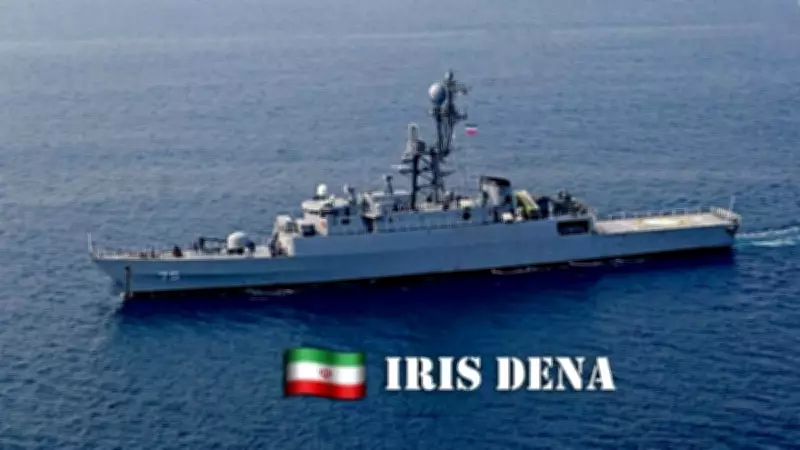
US Military Action Targets Iranian Warship IRIS Dena
The United States conducted a targeted military strike on the Iranian warship IRIS Dena in early March 2026, escalating tensions in the volatile Middle East region. This operation, carried out by US forces, represents a significant escalation in the ongoing geopolitical standoff between Washington and Tehran. The IRIS Dena, a key vessel in Iran's naval fleet, was reportedly engaged in activities deemed provocative by US intelligence agencies prior to the strike.
Geopolitical Context and Immediate Fallout
This military action occurred against a backdrop of heightened regional instability, with multiple flashpoints across the Middle East. The strike has triggered immediate diplomatic repercussions, with Iran condemning the action as an act of aggression and vowing to respond through appropriate channels. Regional powers have been closely monitoring the situation, concerned about potential spillover effects that could destabilize crucial maritime trade routes.
The international community has responded with mixed reactions, reflecting the complex alliances and competing interests in the region. Some Western nations have expressed support for the US action as necessary for regional security, while others have called for restraint and diplomatic solutions.
India's Diplomatic Position: A Nuanced Approach
India has maintained a carefully calibrated neutral position following the strike, a stance that has drawn criticism from some quarters who argue New Delhi should take a more definitive position. However, this criticism represents flawed logic that fails to account for India's complex geopolitical realities.
India's foreign policy approach is guided by several key considerations:
- Strategic autonomy: Maintaining independence in foreign policy decisions without alignment to any power bloc
- Energy security: Protecting crucial oil imports from the Middle East region
- Diaspora welfare: Ensuring the safety of millions of Indian citizens working in Gulf countries
- Regional stability: Supporting peaceful resolution of conflicts that could impact Indian interests
Why Criticizing India's Stance is Misguided
The argument that India should take sides in this conflict overlooks several critical factors. First, India maintains important relationships with all parties involved - including the United States, Iran, and other Middle Eastern nations. Taking a definitive position would jeopardize these carefully cultivated diplomatic ties.
Second, India's primary concern remains the welfare and security of its citizens in the region. Any escalation of conflict could directly endanger the large Indian diaspora working across the Middle East. Third, India depends heavily on Middle Eastern oil imports, making regional stability an economic imperative rather than merely a diplomatic preference.
India's call for dialogue and peaceful resolution represents the most pragmatic approach given these complex considerations. Rather than reflecting weakness or indecision, this position demonstrates sophisticated statecraft that balances multiple competing interests while protecting national priorities.
Broader Implications for Global Diplomacy
The US strike on the IRIS Dena and the subsequent diplomatic maneuvering highlight the challenges facing middle powers in an increasingly polarized world order. As major powers pursue confrontational approaches, countries like India must navigate carefully to protect their interests without becoming entangled in conflicts that don't directly serve their national objectives.
This incident underscores the importance of multilateral diplomacy and the need for conflict resolution mechanisms that can address regional tensions before they escalate into military confrontations. The international community would benefit from examining India's balanced approach as a potential model for managing complex geopolitical rivalries without exacerbating tensions.