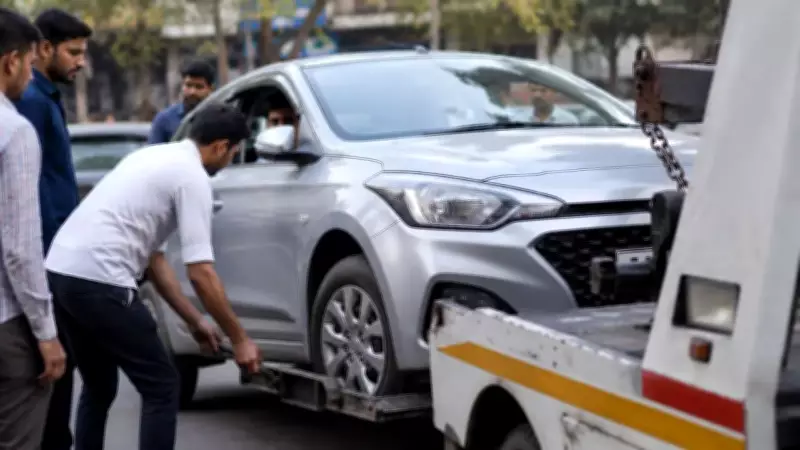
The Uttarakhand High Court has delivered a significant ruling, declaring that banks and finance companies cannot forcibly repossess vehicles through recovery agents without adhering to due legal procedure. The court emphasized that such actions violate constitutional protections and infringe upon the borrower's right to livelihood.
Case Background
Justice Pankaj Purohit presided over a writ petition filed by Savitri Devi, who alleged that her commercial vehicle, financed by ICICI Bank for Rs 17,60,000, was seized by recovery agents without prior notice or legal process. The petitioner claimed that the loan had been fully settled and that she had requested a No Objection Certificate (NOC) from the bank. She argued that the vehicle constituted her primary source of livelihood.
Bank's Objection Rejected
ICICI Bank contended that the dispute was purely contractual and that a writ petition could not be filed against a private bank. However, the court rejected this argument, stating that the case involved more than a mere contractual dispute. The court observed that specific allegations regarding repossession through recovery agents, if established, would amount to arbitrary and high-handed action, not simply a breach of contract.

Key Findings
The court noted that on April 30, 2024, an amount of Rs. 7,45,109 was paid by respondents 2 and 3 to ICICI Bank, leading to the loan account being subrogated in their favor. Subsequently, the vehicle was seized by a recovery agent acting on their behalf. However, no evidence was presented to show that possession was taken in accordance with due process, including prior notice or an opportunity for the borrower to respond.
The court firmly stated: "The existence of a repossession clause in the loan agreement does not authorize the respondents to take law into its own hands. Contractual terms cannot override the requirement of legality and due process."
Legal Precedents
Relying on Supreme Court rulings in ICICI Bank Ltd. vs. Prakash Kaur & Ors. (2007) and Citicorp Maruti Finance Ltd. vs. S. Vijayalaxmi & Anr. (2012), the court reiterated that employing recovery agents or "musclemen" for repossession is impermissible in a society governed by the rule of law. The court further noted that disputes over outstanding dues require adjudication by competent forums and cannot justify unilateral repossession without due process.
Constitutional Violation
The court held that the repossession violated Article 300A of the Constitution of India, which protects individuals from being deprived of their property without authority of law. Consequently, the writ petition was allowed. The high court declared the repossession illegal and directed the respondents to immediately release and restore possession of the vehicle. The court also restrained them and their agents from interfering with the petitioner's peaceful possession except in accordance with due process of law. However, the court clarified that this order does not prevent the respondents from recovering legitimate dues through appropriate legal forums.
This ruling reinforces the principle that financial institutions must follow legal procedures and cannot resort to extrajudicial measures for debt recovery.