Sonam Wangchuk Denies Allegations in Supreme Court Hearing on NSA Detention
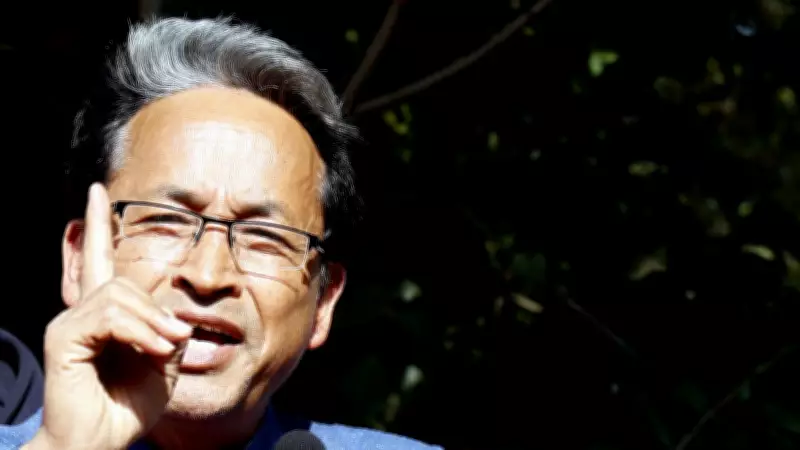
Activist Sonam Wangchuk has firmly denied allegations that he made remarks against the Indian Army or spoke disparagingly about Hindu deities. The Supreme Court is currently hearing a plea filed by his wife, Gitanjali Angmo, challenging his detention under the National Security Act (NSA).
Background of the Case
Wangchuk was detained on September 26, 2025, under the NSA, a law that allows governments to take pre-emptive action against individuals perceived as threats to public order or national security. He had been leading a movement advocating for statehood and protections under the Sixth Schedule of the Indian Constitution for Ladakh prior to his arrest.
Kapil Sibal's Submissions in Court
Senior Advocate Kapil Sibal, representing Gitanjali Angmo, appeared before a bench comprising Justices Aravind Kumar and P B Varale. Sibal addressed several key allegations made by the detaining authority.

Justice Kumar noted that the detaining authority had referenced an interview where Wangchuk was alleged to have said that if demands for statehood and the Sixth Schedule were not met, people of Ladakh would not assist the Indian Army during wartime. Sibal categorically denied this, stating, "That is the problem with this case. They have misled the detaining authority... it arises from a serious misunderstanding of the language gap or intentional distortion."
He clarified that Wangchuk's actual statement emphasized that grievances should not be directed against mother India, saying, "We must not take out our grievances and grudges of our political demand on mother India... Please understand that our fight is with a political party, and please do not mix this with the defence of mother India." Sibal argued that the authority's claims were "completely inconsistent" with the true content of the interview.
Timing of Detention QuestionedSibal also pointed out a discrepancy in timing. The alleged remarks were made on June 8, 2025, but the detention order was issued on September 26, 2025. He questioned, "If this was the worry, he should have been detained in June itself," suggesting that the delay undermines the urgency of the allegations.
Denial of Arab Spring and Plebiscite ClaimsThe senior counsel refuted allegations that Wangchuk threatened to overthrow the government through an Arab Spring-like movement. Sibal stated, "That's not true. He does not say that. Please see the transcription." He explained that Wangchuk's correct translation conveyed concerns about governmental affection for citizens and environmental care, not calls for rebellion.
Regarding claims of supporting a plebiscite in Ladakh, Sibal mentioned that in an interview, Wangchuk was asked about Kargil's potential merger with Kashmir and responded, "if they want to, they can." He wondered, "what is there about plebiscite?" in such a statement, dismissing it as misrepresentation.
Rejection of Disrespect to Hindu DeitiesSibal strongly denied allegations that Wangchuk disrespected Hindu deities. He highlighted that Angmo is a practising Hindu, and Wangchuk has no reason to disrespect any God. He accused "IT cell people" of deliberately distorting parts of an NDTV interview, noting that fact-check videos have debunked these claims.
He explained that Wangchuk's reference to Ram was an allegorical statement meant to symbolize the unfulfilled promise of constitutional safeguards for Ladakh after its liberation from Kashmir. Sibal added, "If these are statements on the basis of which one is detained, then we might as well stop speaking."
Medical Concerns and Court Directions
During the hearing, the court addressed Wangchuk's health issues. He complained of frequent stomach aches, prompting the court to permit his examination by a specialist from a government hospital. A report on his medical examination has been sought to ensure proper care during detention.

Implications and Ongoing Proceedings
This case highlights tensions between national security measures and freedom of expression in India. Wangchuk's detention under the NSA has sparked debates on the use of such laws in political contexts. The Supreme Court's decision will be closely watched, as it could set precedents for similar cases involving activists and national security concerns.
The hearing continues, with the court examining the validity of the detention order based on the alleged remarks and their interpretation. The outcome may influence how authorities handle dissent and security threats in the future.