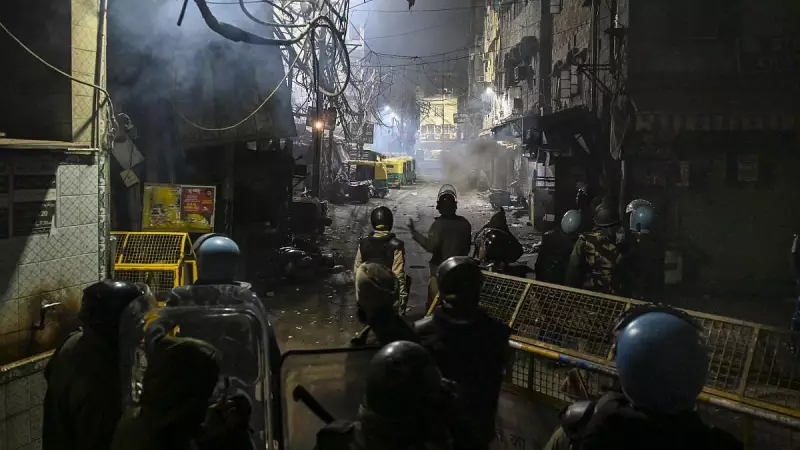
Delhi Police has identified the circulation of audio messages on WhatsApp as the primary catalyst for violence that erupted in a part of the capital, stemming from false rumours about the demolition of a mosque. The incident underscores the potent role of social media in inciting real-world unrest.
Voice Notes Fuel Tensions Ahead of Court Drive
According to police investigations, the chain of events began ahead of a scheduled anti-encroachment drive ordered by the courts. Rumours falsely claiming that the Municipal Corporation of Delhi (MCD) was set to demolish a local mosque started spreading rapidly. These rumours did not circulate as plain text but primarily through voice notes or audio messages shared across a network of community, religious, and neighbourhood groups on the popular messaging platform, WhatsApp.
The police stated that the nature of the content—being audio—and its dissemination within trusted community circles lent it an air of credibility and urgency, making it more effective in mobilising people and sparking fear and anger.
The Timeline and Trigger
The inflammatory audio messages were shared in the period leading up to the court-mandated anti-encroachment action on 08 January 2026. The false information acted as a trigger, leading to gatherings and subsequent clashes. Law enforcement officials had to intervene to control the situation that arose directly from the misinformation campaign orchestrated through private messaging groups.
This incident highlights a recurring challenge for authorities: the rapid spread of unverified information on encrypted platforms that can outpace official communication and have serious public order consequences.
Broader Implications for Social Media Governance
The event has put the spotlight back on the responsibility of messaging platforms and users in curbing the spread of fake news. While the drive was a legal procedure ordered by the courts, the parallel narrative created through WhatsApp voice notes successfully instigated violence, showing a deliberate attempt to disrupt peace.
Police are likely to continue their probe into the origin of these specific audio messages. The case serves as a stark reminder for citizens to verify information from official sources before reacting, especially when it concerns sensitive communal issues or official government actions. The ease with which audio-based rumours can escalate tensions presents a new frontier in maintaining law and order in the digital age.