

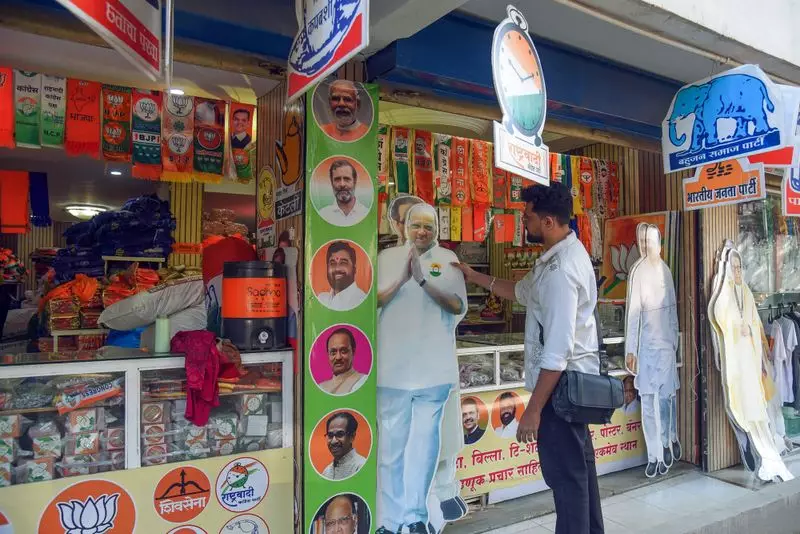
India's political landscape is once again grappling with the persistent malaise of defections, raising serious questions about the efficacy of the very law designed to prevent it. The Anti-Defection Law, enshrined in the Tenth Schedule of the Constitution, was enacted in 1985 with the noble aim of curbing unethical political horse-trading. However, decades later, it appears to have lost its teeth, failing to bite down on the rampant practice of legislators switching sides for power and profit.
The Original Intent Versus Current Reality
The law was born from a pressing need for stability. The rampant toppling of elected governments in the 1960s and 70s through political defections had become a national embarrassment, undermining the mandate of the people. The 52nd Constitutional Amendment Act of 1985 introduced the Anti-Defection Law to address this. Its core provision was simple: any member of a legislature who voluntarily gives up party membership or votes against the party whip could be disqualified, unless they constituted one-third of the party, allowing for a 'merger'.
Yet, the reality today is starkly different. The law, instead of being a deterrent, has become a tool for manipulation. The provision requiring a two-thirds split for a legal merger has been exploited. Legislators resign en masse to avoid disqualification, only to rejoin another party, as seen in several states. Furthermore, the critical role of the Speaker of the House as the quasi-judicial authority to decide on disqualification has become a major point of contention.

Loopholes and Controversies: Where the Law Falters
Several glaring loopholes have rendered the law ineffective. The most significant is the indefinite delay by Speakers in deciding disqualification petitions. Speakers, often belonging to the ruling party, have been accused of sitting on petitions for years, allowing defectors to enjoy power without consequence. This undermines the very purpose of the Tenth Schedule.
Another major flaw is the exemption for splits. While the law now only recognizes a merger with two-thirds of members, the spirit is frequently violated through coordinated resignations and subsequent defections. The definition of 'voluntarily giving up membership' has also been narrowly interpreted by courts, sometimes requiring a formal resignation letter, allowing defectors to technically remain in the party while openly opposing it.
The recent political crises in states like Maharashtra, Madhya Pradesh, and Karnataka have highlighted these failures. The spectacle of elected representatives being whisked away to resorts, followed by dramatic shifts in allegiance, has become a common feature, eroding public trust in parliament democracy.
The Path to Reform: Giving the Law Its Bite Back
Experts and observers argue that urgent reforms are non-negotiable to salvage the integrity of India's democratic institutions. The most widely recommended change is to remove the Speaker's power to adjudicate disqualification cases. This responsibility should be transferred to an independent, time-bound authority, such as the Election Commission of India or a dedicated tribunal led by retired judges.
Secondly, there must be a strict constitutional timeline for deciding disqualification petitions. Any delay beyond this period should result in an automatic disqualification. This would eliminate the tactic of using prolonged delays to gain political advantage.
Furthermore, the law should be amended to treat 'constructive resignation' more seriously. Any act of publicly denouncing the party, campaigning against it, or consistently voting against its directives should be construed as voluntarily giving up membership, even without a formal letter.

Ultimately, the Anti-Defection Law needs a comprehensive overhaul. It must transition from a paper tiger to a robust mechanism that genuinely deters opportunism. The soul of representative democracy is the sacred bond between the voter and their elected representative. When this bond is broken for short-term gain, it is the people's faith that suffers the most. Strengthening this law is not just a legal necessity but a moral imperative to preserve the foundational principles of Indian democracy.





