

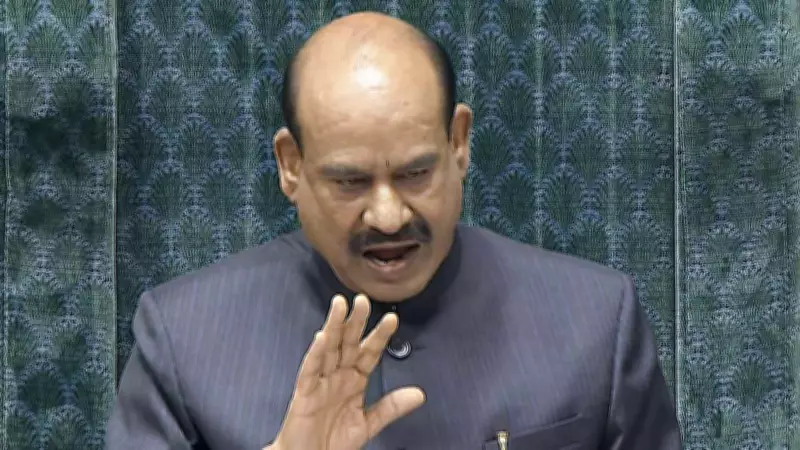
History Repeats in Lok Sabha: The 1968 Punjab Constitutional Crisis That Mirrors Opposition's War on Speaker Om Birla
In a striking historical parallel, the recent notice of a no-confidence motion submitted by 118 Opposition MPs in the Lok Sabha against Speaker Om Birla recalls a similar event from 1968 in the Punjab Assembly. Back then, legislators moved against Speaker Joginder Singh Mann, alleging his failure to maintain order and decorum, a move that spiraled into a significant constitutional crisis.
The 1968 Punjab Assembly No-Confidence Motion
On March 6, 1968, a no-confidence motion was brought against Punjab Assembly Speaker Joginder Singh Mann. The motion was backed by 56 members from the Janata Party and Congress, who claimed that Mann had not upheld proper conduct in the Assembly. At that time, the government was led by Lachhman Singh Gill of the Punjab Janata Party, which had formed a coalition with the Congress after the fall of the previous United Front government in November 1967.
However, political science expert Jagrup Singh Sekhon from Guru Nanak Dev University, Amritsar, notes a key distinction. "This motion had no similarity with the motion being proposed by Opposition MPs in Lok Sabha. The Punjab Government at the time was a coalition government. It was a flaccid situation. No party was in the majority. In the case of Om Birla, he has crossed all constitutional propriety," Sekhon explained.

Constitutional Challenges and Legal Battles
The motion quickly faced legal hurdles. On March 7, 1968, then Leader of the Opposition Gurnam Singh challenged it as illegal, citing constitutional requirements for a 14-day notice for Speaker removal and noting that rules only permit a motion for removal, not a simple no-confidence motion. Speaker Mann agreed, declaring the motion unconstitutional and treating it as if it had never been moved, which angered many legislators.
In response, Mann adjourned the Assembly for two months during the Budget Session, creating a crisis as the government needed to pass the budget before March 31. This led to a constitutional impasse in Punjab, with the government unable to function without budgetary approval. On March 11, 1968, the Speaker prorogued the Assembly, an action later declared unconstitutional by the High Court, though the Supreme Court eventually set aside this judgment on July 30, 1968, ending the crisis.
Political Fallout and Comparisons to Current Events
Despite surviving the legal battle, the crisis severely damaged the relationship between the Punjab Janata Party and Congress. As differences grew, Congress withdrew support from Lachhman Singh Gill's government, leading to his resignation on August 21, 1968, due to lack of support. No other party could form a government, resulting in the Assembly's dissolution and the imposition of President's Rule in Punjab on August 23, 1968.
Sekhon drew further comparisons to highlight the role of Speakers in democratic frameworks. He cited Somnath Chatterjee's tenure as Lok Sabha Speaker during Dr. Manmohan Singh's government (2004–2009), where Chatterjee was known for upholding constitutional values above party politics, especially during the 2008 Indo-US Civil Nuclear Agreement crisis. "The role being played by the incumbent Speaker of Lok Sabha is a challenge to the democratic framework of society. The chair he is on and the role he is playing are diametrically opposite," Sekhon added, emphasizing the current tensions.
Implications for Modern Politics
This historical episode underscores the delicate balance of power and procedure in legislative bodies. The 1968 crisis in Punjab serves as a cautionary tale about the consequences of political maneuvers against Speakers, reflecting similar dynamics in today's Lok Sabha. As the Opposition targets Om Birla, the echoes of past constitutional debates remind us of the enduring challenges in maintaining democratic decorum and order.
The story, originally reported by Kanchan Vasdev, a Senior Assistant Editor with extensive experience covering Punjab politics, highlights how history often repeats itself in the corridors of power, with lessons from the past informing present-day political strategies and conflicts.






