December 6, 1985, stands as a significant date in South Asian history, marked by diplomatic strides, a prime ministerial warning on terrorism, and a tragic industrial accident in the national capital. This day, exactly forty years ago, saw key developments that reflected the regional and domestic challenges of the era.
SAARC Ministers Unite for Regional Cooperation
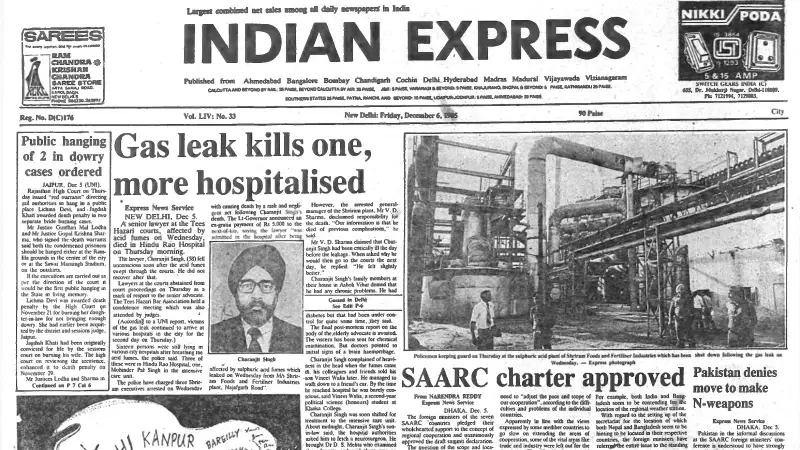
In a major step for regional diplomacy, the foreign ministers of the seven member nations of the South Asian Association for Regional Cooperation (SAARC) came together on this day. They pledged their wholehearted and unanimous support for enhancing collaboration across the region. The council unanimously approved the draft declaration for an upcoming summit, signaling a collective commitment to a shared future.
However, not all issues were settled. The critical questions regarding the final scope and the location for the permanent SAARC secretariat, which had been recommended by a committee of foreign secretaries, were left undecided. It was agreed that this matter would be handed over to an official committee to be resolved in the near future.

PM Rajiv Gandhi's Firm Stance on Punjab Extremism
On the domestic front, Prime Minister Rajiv Gandhi addressed the growing concern of terrorism in Punjab. He asserted that firm and decisive measures must be taken against terrorists attempting to disturb the hard-earned peace in the state once again. Gandhi emphasized that these extremists held no genuine faith in any religion and that their sole objective was to destabilize one of India's most progressive states.
The Prime Minister called upon the public to actively assist both the state and central governments in identifying these anti-national elements and ensuring they were dealt with effectively. This statement underscored the government's resolve to combat the rising militant threat in the region during the mid-1980s.
Tragic Acid Leak in Delhi Courts
A separate and tragic incident unfolded in New Delhi, where an acid leak at the Tees Hazari courts complex led to one death and multiple injuries. Charanjit Singh (58), a senior lawyer practicing at the courts, was severely affected by the toxic fumes. He fell unconscious shortly after the fumes spread and was rushed to Hindu Rao Hospital, where he later died.
Police reports confirmed that sixteen other individuals were also hospitalized across various city facilities after inhaling the dangerous acid fumes. In the aftermath of the lawyer's death, the police took legal action, charging three executives of Shriram with causing death by a rash and negligent act.
Unrest in Ahmedabad Over Reservations
Meanwhile, in Ahmedabad, Gujarat, anti-reservation protests escalated. Protestors, who had called for a boycott of classes, turned violent. They set fire to two buses near Navgujarat College. One of the burnt vehicles belonged to the Ahmedabad Municipal Transport Services, while the other was a state transport double-decker bus that shuttled between Gandhinagar and Ahmedabad.
The unrest caused significant disruption, with most schools in the city suspending work for the day. Reports indicated that groups of students roamed various parts of the city, throwing stones at school buildings, further exacerbating the tense situation.
This day in 1985, therefore, captured a snapshot of India's journey—highlighting diplomatic hopes at the SAARC forum, serious internal security challenges, industrial safety failures, and social tensions over policy, all unfolding simultaneously.