February 1986: A Swift Government U-Turn on Fuel Prices
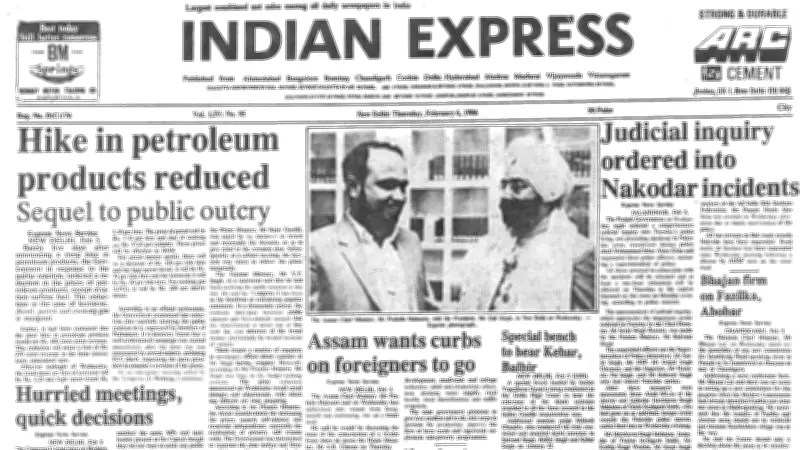
In a remarkable display of responsiveness to public sentiment, the Indian government executed a rapid policy reversal in early February 1986. Merely five days after implementing a significant increase in petroleum product prices, authorities ordered a reduction in response to widespread public reaction.
The Price Adjustment Details
The government's initial price hike, which excluded aviation turbine fuel, was met with considerable public discontent. In response, officials mandated a marginal reduction in the prices of several essential fuels. This adjustment specifically applied to kerosene, diesel, petrol, and cooking gas, providing some relief to consumers across the nation.
The financial implications of this policy shift were substantial. Earlier projections had estimated the price increase would generate approximately Rs 800 crore in additional revenue for the government. However, the subsequent reduction resulted in a significant financial setback, entailing a loss of Rs 270 crore from the originally anticipated gains.

Assam's Development Agenda and Border Concerns
Simultaneously, Assam Chief Minister Prafulla Mahanta announced important developments during a news conference in New Delhi. Mahanta revealed that Assam's annual plan for the 1986-1987 fiscal year had been fixed at Rs 500 crore, representing a substantial 22 percent increase over the previous year's allocation.
The chief minister also outlined key discussion points for his upcoming meeting with Home Minister S.B. Chavan. Primary among these was the construction of a border fence, a matter of significant strategic importance for the northeastern state. Additionally, Mahanta's government formally requested the central government to lift restrictions on foreign travel to Assam, aiming to boost tourism and economic development in the region.
India's Diplomatic Engagements
On the international front, India maintained active diplomatic involvement in regional affairs. "Very intensive discussions" were reportedly underway between New Delhi and Colombo regarding potential progress toward resolving Sri Lanka's ethnic conflict. India's mediation efforts, however, faced challenges when Sri Lanka delivered a "very negative" response to proposals from the Tamil United Liberation Front just before a scheduled foreign secretary visit.
In another international matter, India took a firm stance on global security issues. The government strongly condemned Israel's hijacking of a Libyan aircraft in international airspace, characterizing the action as a "complete violation" of established international law. This incident prompted concerns about regional stability, with Syria threatening retaliation and warning that Israel's actions could potentially trigger escalation in West Asia.
This series of events from February 1986 illustrates a government balancing domestic economic pressures with international diplomatic responsibilities, while state governments pursued development agendas and border security measures.