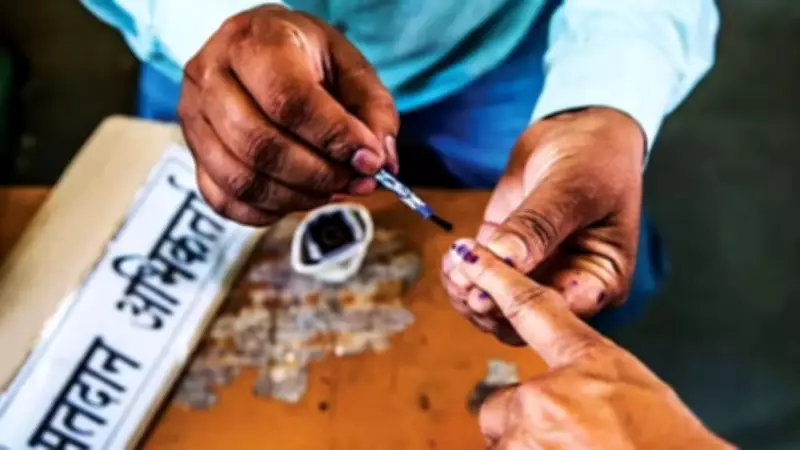
2026 Assembly Elections Enter Critical Phase with Intense Campaigning Across States
The 2026 Assembly elections are currently underway in multiple phases, marking a significant political event across India. The first round of voting commenced on April 9, with subsequent phases scheduled throughout April, culminating in the counting of votes in mid-May. Key states participating include Assam, Kerala, Puducherry, and West Bengal, each presenting unique political landscapes and electoral challenges.
Strategic Moves and Political Dynamics
In West Bengal, Trinamool Congress (TMC) national general secretary Abhishek Banerjee chaired an internal strategy meeting on Tuesday to review preparations and fine-tune the party's poll strategy. During the closed-door session, Banerjee expressed confidence that the TMC would secure a stronger mandate than in 2021, asserting that the opposition Bharatiya Janata Party (BJP) is aware of the ground reality. He criticized the Election Commission, alleging bias in favor of the BJP and claiming that substantial resources are being used to create an artificial wave.
Banerjee also took aim at Union Home Minister Amit Shah, accusing him of intimidating voters with remarks about "TMC goons." Additionally, he condemned the arrest of Vinesh Chandel, co-founder of I-PAC, as a misuse of investigative agencies to target opposition-linked individuals. The TMC and BJP are locked in an intense contest, with polling in West Bengal scheduled for two phases on April 23 and April 29, and vote counting set for May 4.

Election Commission's Vigilance and Administrative Changes
The Election Commission has increased its vigilance, deploying central forces and implementing administrative reshuffles to curb malpractice. In a recent move, the Commission removed the Inspector In-Charge of Beldanga police station in West Bengal's Murshidabad district, following the earlier removal of the Sub-Divisional Police Officer. This is part of a broader effort to ensure fair elections, with several bureaucrats and IPS officers being reassigned since the announcement of the polls.
The Commission has made it clear that those removed cannot be appointed for any election-related work in the state temporarily. Polling in West Bengal will cover 294 Assembly constituencies in two phases, with Murshidabad district voting in the first phase.
Tamil Nadu's Heated Campaign and Incident-Filled Rallies
In Tamil Nadu, the campaign has turned sharply confrontational, with incidents highlighting the challenges of large gatherings. A major election rally for Tamilaga Vettri Kazhagam (TVK) president Vijay was abruptly cancelled in Tiruppur district after at least 15 supporters collapsed due to severe heat and overcrowding. The incident, which involved 13 women and two men fainting, led to the cancellation of a scheduled roadshow on police advice, with most affected individuals reported stable after medical treatment.
This follows a tragic stampede in Karur in 2025, which resulted in 41 deaths and is now under CBI investigation. Tamil Nadu will go to the polls in a single phase on April 23, with counting on May 4. The main contest is expected between the DMK-led Secular Progressive Alliance and the National Democratic Alliance led by AIADMK with BJP and PMK as allies, with Vijay's TVK potentially turning it into a three-way fight.
Political Rhetoric and Welfare Promises
Deputy Chief Minister Udhayanidhi Stalin of the DMK framed the Tamil Nadu election as a battle between "Delhi and Tamil Nadu," criticizing the BJP-led central government for failing to provide adequate funds. He highlighted welfare measures like the morning breakfast scheme for government school students, which will be extended to Class 8, and free laptops for college students, benefiting over 32 lakh students in the future. He also promised to increase the Magalir Urimai Thogai from Rs 1,000 to Rs 2,000 per month for women if the DMK returns to power.

In response, AIADMK general secretary Edappadi K. Palaniswami criticized Chief Minister M.K. Stalin for opposing the Centre's delimitation exercise, asserting that Prime Minister Narendra Modi and Amit Shah have assured it won't affect Tamil Nadu. Palaniswami listed welfare measures from the AIADMK regime, such as internal reservation for government school students to become doctors and COVID-19 relief efforts, while accusing the DMK of failing to fulfill poll promises.
Broader Electoral Context and Alliances
The BJP-led NDA aims to retain power in Assam and expand its footprint in southern and eastern regions, while the Congress-led INDIA bloc and regional parties strive to consolidate anti-incumbency sentiment. Key campaign themes include economic concerns, welfare delivery, law and order, and regional aspirations. As campaigning intensifies, alliances, candidate selection, and voter turnout will play decisive roles in determining the outcome of these high-stakes elections.
In other developments, Raja Anbazhagan of the DMK expressed confidence in a decisive win from T. Nagar in Tamil Nadu, projecting a margin of over 10,000 votes. Meanwhile, Tamilisai Soundararajan of the BJP alleged a lack of development and corruption under the DMK, calling for a political shift. In Kerala, Leader of the Opposition V.D. Satheesan raised concerns over delays in releasing official polling data from the April 9 elections, urging the Election Commission to ensure transparency.
The 2026 Assembly elections are shaping up to be a complex and dynamic political event, with intense campaigning, strategic maneuvers, and incidents that underscore the challenges of conducting large-scale democratic exercises in diverse regions.