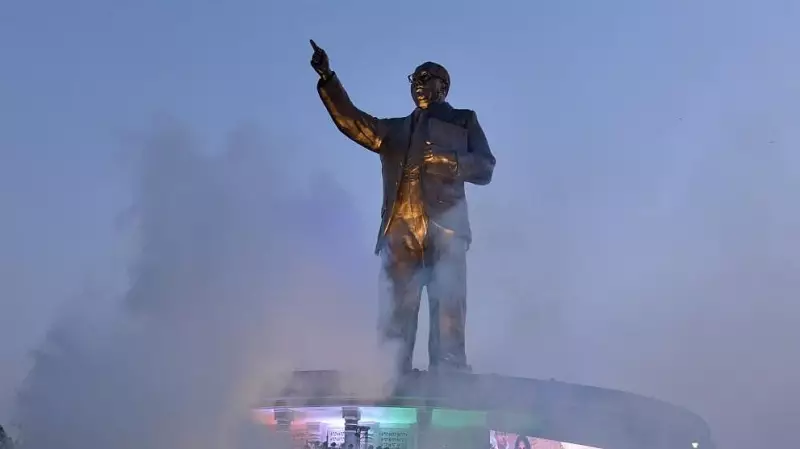
On the occasion of your 133rd birth anniversary, celebrated as Ambedkar Jayanti, this letter is penned not just in remembrance, but in a spirit of candid conversation with your towering legacy. The date, April 14, 2024, marks another year where millions across India pay homage to the principal architect of the Indian Constitution and the indefatigable champion of social justice.
The Unfinished Revolution: Your Vision and Today's Reality
Dear Dr. Ambedkar, your life's work was a monumental struggle against the entrenched evil of caste-based discrimination. You fought to dismantle the hierarchical and oppressive Chaturvarna system, envisioning a society built on the foundational principles of Liberty, Equality, and Fraternity. You embedded these very principles into the heart of the Indian Constitution, a document you shepherded with immense foresight.
Today, your statues stand tall in countless towns and universities, and your name is invoked with reverence in political discourse. Constitutional safeguards like reservation exist as a direct result of your efforts, offering a crucial ladder for social and educational advancement to Scheduled Castes, Scheduled Tribes, and Other Backward Classes. The very fact that the nation observes this day as a solemn tribute is a testament to your indelible impact.

Yet, a honest dialogue with your memory compels us to acknowledge the chasm between legal provisions and social reality. Caste-based violence, discrimination, and social ostracization continue to stain the fabric of Indian society. The promise of annihilation of caste, your clarion call, remains a distant goal. Economic disparities often overlap with caste identities, and access to dignity and equal opportunity is still not universal.
The Contemporary Battlegrounds of Social Justice
Your warnings about the dangers of majoritarianism and the need for robust constitutional morality resonate with acute urgency in the present climate. The core ideas you championed are constantly being tested and reinterpreted.
The policy of reservation, a tool for corrective justice, often finds itself at the center of heated debate. While it has empowered many, questions about its implementation, scope, and duration spark complex discussions about equity and efficiency. Furthermore, the rise of identity politics sees your legacy being claimed and interpreted by various sides of the political spectrum.
Your emphasis on education as the great emancipator is more relevant than ever. While literacy rates have improved, the quality of education and the persistence of discrimination within educational institutions pose significant hurdles. The digital divide and access to new-economy skills risk creating new forms of exclusion.
A Legacy of Unyielding Courage and Intellectual Rigour
Beyond the politician and the jurist, you remain a figure of profound intellectual courage. Your scholarly works, like Annihilation of Caste, continue to challenge and inspire. Your conversion to Buddhism in 1956, along with hundreds of thousands of followers, was a final, powerful act of protest against Hindu caste hierarchy and a search for a path based on equality and reason.
Your journey from being denied basic water access to drafting the nation's supreme law is a narrative that fuels aspirations. You taught the marginalized to "Educate, Agitate, Organize"—a motto that continues to empower social movements.
As we write this, we reflect on your own words from the Constituent Assembly on November 25, 1949, where you cautioned about the continued use of unconstitutional methods and the need to hold fast to constitutional democracy. This warning serves as a crucial compass for the nation today.
Looking Forward: The Path Ahead
So, what would we report to you, Babasaheb? We would say that your Constitution has shown remarkable resilience. It has been the bedrock of the world's largest democracy. The legal frameworks you established provide weapons for the marginalized to fight for their rights. Your face on the wall of every government office is a constant reminder of the state's professed ideals.

But we would also confess that the social transformation you dreamed of is a marathon, not a sprint. The battle has moved from legal frameworks to the harder terrain of hearts and minds, of everyday social interactions, and of equitable economic growth. The conversation you started is alive, but it is often fraught and polarized.
On this Ambedkar Jayanti, the greatest tribute would be to move beyond ritualistic remembrance. It lies in critically engaging with your ideas, in honestly assessing the gaps in achieving social justice, and in renewing the collective commitment to build the India you fought for—an India where every individual, regardless of birth, enjoys true liberty, equality, and fraternity. Your legacy is not a relic of the past; it is a living challenge for the present and a blueprint for a more just future.