

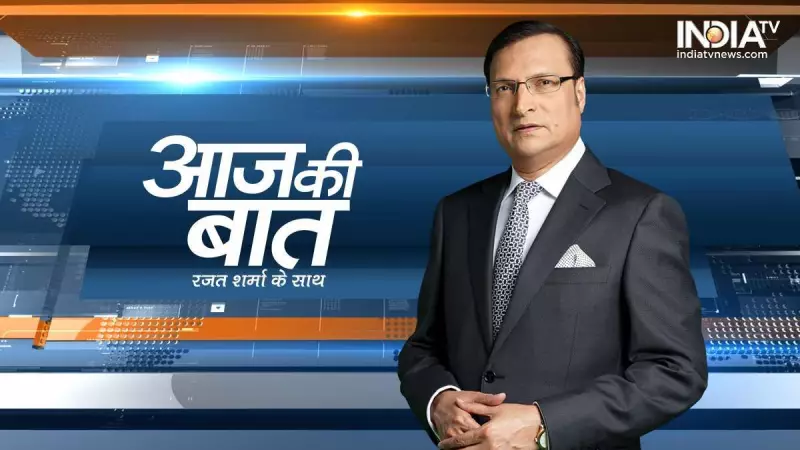
In the latest episode of his flagship news debate show, veteran journalist Rajat Sharma tackled a series of contentious political and social issues gripping the nation. The episode aired on January 8, 2026, provided an in-depth analysis of three major stories: the escalating feud between political strategist Prashant Kishor's I-PAC and West Bengal Chief Minister Mamata Banerjee, the simmering tensions between Minneapolis in the USA and Delhi, and the violent clashes at Delhi's historic Turkman Gate area.
The I-PAC and Mamata Banerjee Fallout: A Political Rift Widens
The show dedicated significant time to dissecting the very public and acrimonious split between the Indian Political Action Committee (I-PAC) and Trinamool Congress chief Mamata Banerjee. Rajat Sharma detailed how the once-strong alliance, credited for crafting the TMC's successful electoral strategy, has now descended into a war of words. The discussion highlighted the core disagreements over political strategy and autonomy that led to the breakdown.
Analysts on the panel debated whether this split would weaken the TMC's organizational machinery ahead of future elections or if Didi's party could go it alone. The episode underscored that this development is not just an internal party matter but has significant ramifications for the opposition's unity and the political landscape of Eastern India.

Minneapolis-Delhi Tensions: A Diplomatic Challenge
Shifting focus to international affairs, 'Aaj Ki Baat' explored the growing diplomatic and social tensions between Minneapolis, USA, and Delhi, India. The episode connected local incidents in both cities to broader themes of identity, justice, and international perception. Rajat Sharma presented the complex layers of this issue, examining how events in one global city can trigger reactions and protests thousands of miles away.
The discussion analyzed the potential impact on India-US relations at a people-to-people level, beyond formal diplomacy. The show emphasized the need for nuanced understanding and dialogue to prevent localized issues from escalating into bilateral friction.
Turkman Gate Clashes: History and Present Conflict
The third major segment brought the spotlight back to Delhi, focusing on the reported clashes in the Turkman Gate area. Rajat Sharma provided historical context, reminding viewers of the area's significance during the Emergency period in the 1970s. The episode then connected this past to the present-day unrest, investigating the immediate causes and the parties involved in the recent violence.
The analysis raised critical questions about law and order, communal harmony, and the political narratives being built around such incidents in the capital city. Panelists discussed the administration's response and the long-term implications for social cohesion in one of Old Delhi's most iconic localities.
Key Takeaways and Broader Implications
Throughout the episode, Rajat Sharma wove these disparate stories into a cohesive narrative about India's contemporary challenges. The show concluded that the I-PAC-Mamata saga reflects the volatile nature of modern political alliances, where consultants wield significant power. The Minneapolis-Delhi issue was framed as a test for India's global image and its diaspora relations.
Finally, the Turkman Gate clashes were presented as a stark reminder of how historical fault lines can resurface, demanding sensitive and firm handling by authorities. The January 8, 2026 episode of 'Aaj Ki Baat' served as a comprehensive primer on the political, diplomatic, and social undercurrents shaping the start of the new year.






