

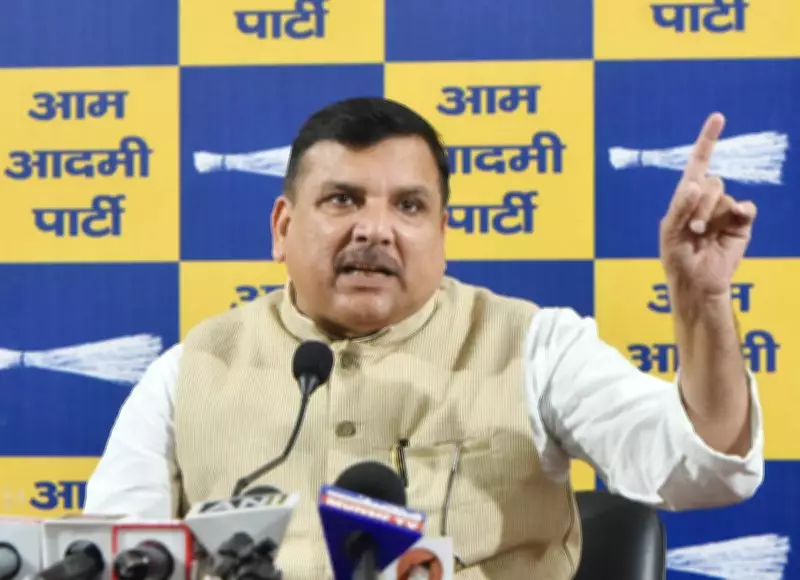
AAP MP Sanjay Singh Condemns Delhi CM's Remarks on Court Verdict
In a significant development within the Aam Aadmi Party (AAP), Member of Parliament Sanjay Singh has publicly criticized Delhi Chief Minister Arvind Kejriwal for his comments regarding a recent court ruling. This incident has sparked a political debate, drawing attention to internal party dynamics and broader issues of judicial respect in India's political landscape.
Background of the Court Verdict
The controversy stems from a court judgment that has been a subject of public discussion. While the specific details of the case are not disclosed in the original report, it is understood to involve legal matters pertinent to Delhi's governance or political affairs. The verdict, delivered by the judiciary, has implications for the AAP-led administration in the capital.
Chief Minister Arvind Kejriwal, known for his vocal stance on various issues, made remarks in response to this court decision. His comments have been interpreted by some as critical or dismissive of the judicial process, though the exact nature of his statements is not fully detailed in the source material.

Sanjay Singh's Condemnation
AAP MP Sanjay Singh, a prominent figure within the party, has taken a strong stand against Kejriwal's remarks. In his condemnation, Singh emphasized the importance of respecting court verdicts and upholding the integrity of the judiciary. He argued that such comments from a chief minister could undermine public trust in legal institutions and set a poor precedent for political discourse.
Singh's criticism is notable as it highlights potential internal disagreements within AAP, a party that has often projected a united front. His statements suggest that there may be differing views on how to approach judicial matters, with Singh advocating for a more cautious and respectful tone towards court rulings.
Political Implications and Reactions
This incident has broader political ramifications, particularly in the context of Delhi's state politics and national perceptions. The condemnation by an AAP MP of his own party's chief minister could signal internal tensions or strategic positioning ahead of upcoming elections or policy debates.
Reactions from other political parties and stakeholders are likely to follow, with opponents possibly using this to question AAP's cohesion and commitment to democratic norms. The episode also raises questions about the balance between political expression and judicial respect, a topic that resonates across India's political spectrum.
Analysis of Judicial-Political Dynamics
The controversy underscores the complex relationship between politics and the judiciary in India. Courts often play a crucial role in adjudicating disputes that have political overtones, and comments from political leaders can influence public perception of these institutions.
Sanjay Singh's condemnation reflects a concern that Kejriwal's remarks might be seen as challenging the authority of the courts, which could have long-term effects on governance and rule of law. This incident serves as a reminder of the need for political leaders to exercise restraint when discussing judicial matters, to maintain the sanctity of legal processes.
Conclusion and Future Outlook
As the situation develops, it will be important to monitor how AAP addresses this internal criticism and whether Kejriwal responds to Singh's condemnation. The party's handling of this issue could impact its image and electoral prospects, especially in Delhi where it holds power.
Moreover, this episode may prompt a wider discussion on the ethics of political commentary on court verdicts, potentially leading to calls for more disciplined communication from public officials. For now, Sanjay Singh's stance has added a new dimension to the political narrative in Delhi, highlighting the ongoing challenges of navigating judicial and political intersections in India.






