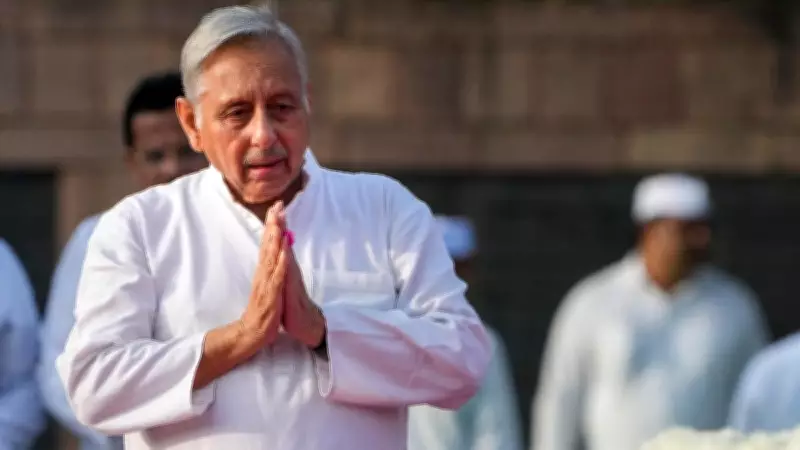
Mani Shankar Aiyar Issues Stern Warning to Congress Leadership
In a bold and provocative statement, senior Congress leader Mani Shankar Aiyar has declared that the party faces inevitable doom if it cannot tolerate dissenting voices within its ranks. This stark warning comes amid ongoing internal debates and factionalism within the Indian National Congress, highlighting deep-seated concerns about the party's future direction and ideological coherence.
A Call to Embrace Internal Debate and Diversity of Opinion
Aiyar emphasized that a healthy political organization must foster an environment where differing viewpoints are not only accepted but actively encouraged. He argued that suppressing dissent leads to stagnation and ultimately, organizational collapse. The veteran politician's remarks are seen as a direct critique of the current Congress high command's approach to managing internal disagreements and consolidating power.
Recalling Rajiv Gandhi's Historic Parliamentary Address
To underscore his point, Aiyar invoked the memory of former Prime Minister Rajiv Gandhi, specifically referencing a pivotal speech delivered in Parliament back in 1989. In that address, Rajiv Gandhi famously asserted that 'only a secular Bharat can survive', a statement that has since become a cornerstone of the Congress party's professed commitment to secular principles and inclusive governance.

Daring the High Command: A Challenge for Rahul Gandhi
In a move that adds significant political weight to his critique, Aiyar publicly dared the Congress high command to have Rahul Gandhi, the party's prominent leader and Rajiv Gandhi's son, repeat those exact words today. This challenge is interpreted as a test of the current leadership's dedication to the secular ideals historically championed by the party, as well as a gauge of their willingness to uphold the legacy of previous generations.
The timing of Aiyar's comments is particularly noteworthy, as the Congress party navigates a complex political landscape marked by electoral challenges and the need for strategic renewal. His statements have ignited fresh discussions about:
- The importance of internal democracy and open dialogue within political parties.
- The relevance and application of secularism in contemporary Indian politics.
- The continuity of ideological commitments across different leadership eras in the Congress.
As reactions pour in from various political quarters, Aiyar's warning serves as a poignant reminder of the critical balance between party discipline and intellectual freedom. The Congress leadership's response to this challenge could have profound implications for its unity, public perception, and long-term viability in India's dynamic democratic arena.