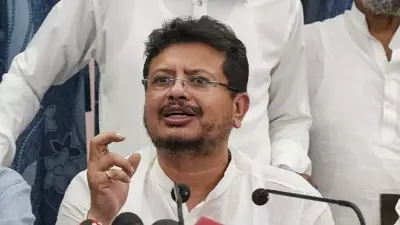
Ajit Pawar's Untimely Death: A Political Earthquake in Maharashtra
The sudden and tragic death of Ajit Pawar, the Deputy Chief Minister of Maharashtra, in a devastating air crash on Wednesday has sent shockwaves through the political landscape of the state. This premature exit marks the abrupt end of a career that spanned decades, leaving behind a profound void in a polity characterized by fluid alliances and personal dominance. As a six-time Deputy CM and eight-term MLA, Ajit Pawar was a central figure in Maharashtra's pragmatic politics, often crossing ideological boundaries while maintaining a strong grassroots connection.
A Career of Pragmatism and Controversy
Ajit Pawar's political journey began with his election to the Lok Sabha in 1991 from Baramati, a seat he later vacated for his uncle, Sharad Pawar, to focus on state politics. Over the years, he earned a reputation as an effective administrator and a finance minister who emphasized fiscal discipline, despite facing allegations of corruption. His blunt and impatient nature frequently courted controversy, notably during his swift swearing-in as Devendra Fadnavis's deputy in 2019, which led to a short-lived government, and his contentious remarks during water shortages.
Power was largely inherited through family ties, but Ajit Pawar carved his own path in western Maharashtra's sugar belt, where he became known as "Ajit dada." He skillfully managed the party organization, engaged with milk unions and sugar cooperatives, and coordinated with various political players. When the Nationalist Congress Party (NCP) split in 2023, the majority of its workers aligned with his faction, and their performance in the 2024 assembly elections seemed to solidify his claim to leading the real NCP.

The Ripple Effects on Maharashtra's Political Landscape
Ajit Pawar's death comes at a critical juncture for Maharashtra, where political churn has been ongoing since the splits in the NCP and Shiv Sena reshaped the two main coalitions, the Maha Vikas Aghadi (MVA) and the Mahayuti. Recent municipal polls in Pune and Pimpri-Chinchwad saw the two NCP factions collaborating, hinting at underlying tensions within the Mahayuti. His absence is likely to sharpen the tumult in this volatile environment, raising urgent questions about the future direction of his party and family.
In a political sphere dominated by familial legacies and strong personalities, Ajit Pawar's passing leaves a significant leadership vacuum. He joins a list of leaders like Madhavrao Scindia, Y.S. Rajasekhara Reddy, Pramod Mahajan, and more recently, Vijay Rupani, who departed during their political prime. This event not only forecloses his personal ambitions, such as becoming chief minister, but also adds to the uncertainty in Maharashtra's already fluid politics.
Looking Ahead: Challenges and Opportunities
The aftermath of Ajit Pawar's death will test the resilience of the NCP and its factions, as well as the stability of Maharashtra's coalitions. Key challenges include:
- Navigating the leadership succession within the Pawar family and the NCP.
- Managing the ongoing realignments between the MVA and Mahayuti coalitions.
- Addressing grassroots concerns in regions like the sugar belt, where Ajit Pawar had a stronghold.
As Maharashtra mourns this loss, the political arena braces for further shifts, with his legacy of pragmatic politics and direct engagement likely to influence future strategies. The coming months will be crucial in determining how his absence reshapes the state's governance and party dynamics.