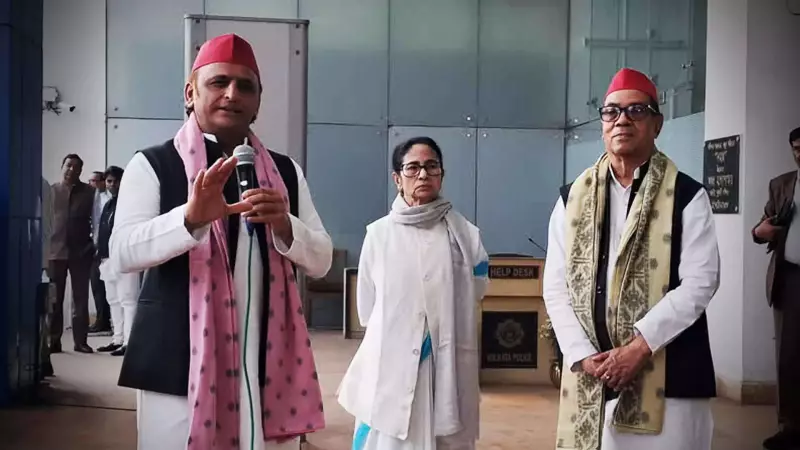
In a significant political development, Samajwadi Party chief Akhilesh Yadav held a crucial meeting with West Bengal Chief Minister Mamata Banerjee, extending his full support to her ongoing political battle against the Bharatiya Janata Party. The meeting, which lasted for approximately forty minutes, saw Yadav lauding Banerjee's resilience and strategic acumen in countering what he described as the BJP's relentless "onslaught" across the nation.
Praise for Mamata's Confrontation with ED Raids
Akhilesh Yadav specifically commended Mamata Banerjee for her successful handling of the Enforcement Directorate raids on the offices of I-PAC, a political consultancy firm, and the residence of its director, Pratik Jain. He emphasized that Banerjee had effectively "defeated" the ED in these instances, showcasing her ability to withstand pressure from central agencies. Yadav also made a pointed reference to the BJP's alleged frustration over the "pain of losing the pen drive" during these raids, hinting at broader political tensions.
Assertion of Mamata's Leadership Against BJP
Speaking to the media after the meeting, Akhilesh Yadav asserted that only Mamata Banerjee possesses the capability to challenge the BJP effectively in the current political landscape. He expressed confidence that she would return as the Chief Minister of West Bengal, reinforcing her position as a key opposition figure. Yadav's remarks underscored a growing alliance between regional parties in their opposition to the ruling party at the center.

Criticism of NRC and Electoral Roll Revisions
During his address, Akhilesh Yadav also launched a sharp critique against attempts to implement the National Register of Citizens under the guise of Special Intensive Revision of electoral rolls. He alleged that such exercises lead to voter harassment and pose a significant threat to secularism in India. Yadav cited the example of Uttar Pradesh, where nearly 2.89 crore names were removed from the draft electoral rolls, calling it a deliberate move to undermine democratic principles.
Call to Save Democracy
Akhilesh Yadav framed his support for Mamata Banerjee as part of a larger "fight to save democracy" in India. He accused the BJP of using various tactics, including agency raids and electoral manipulations, to suppress opposition voices. Yadav's meeting with Banerjee is seen as a strategic move to strengthen opposition unity ahead of future elections, with both leaders positioning themselves as defenders of democratic values against what they perceive as authoritarian tendencies.
The political implications of this meeting are substantial, as it highlights the ongoing realignments within India's opposition space. Akhilesh Yadav's endorsement of Mamata Banerjee not only bolsters her credibility but also signals a potential coalition-building effort to counter the BJP's dominance. As tensions escalate, such alliances could play a pivotal role in shaping the country's political trajectory in the coming years.