

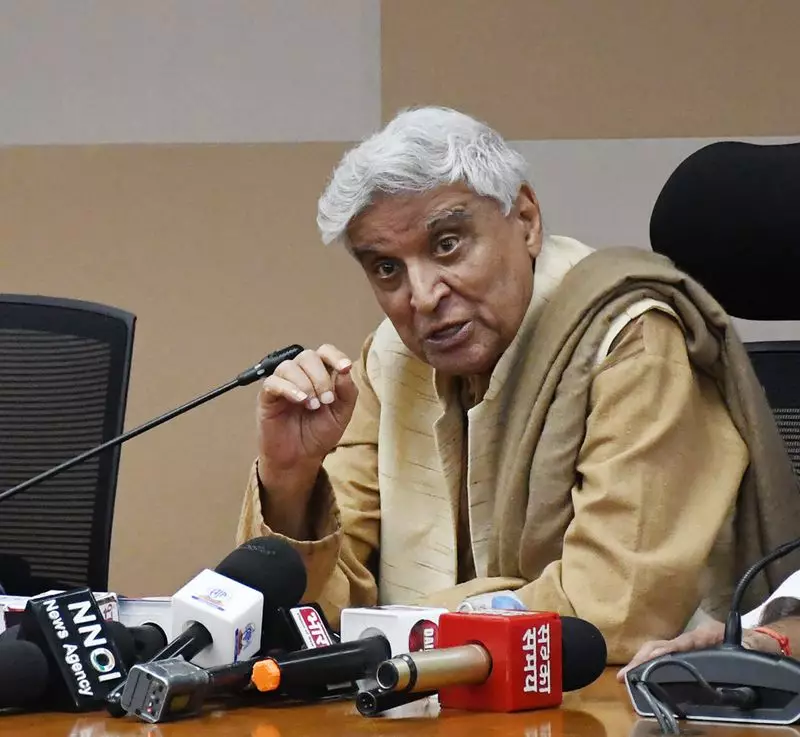
Veteran lyricist and screenwriter Javed Akhtar has called for an unconditional apology from Bihar Chief Minister Nitish Kumar. This demand follows a controversial statement made by Kumar, where he used the term 'naqab' (veil) in a political context, which has sparked significant backlash.
The Controversial Remark and Immediate Backlash
The incident unfolded when Nitish Kumar, the leader of the Janata Dal (United) and Chief Minister of Bihar, made a remark during a political discourse. While addressing the media or at a public event, Kumar used the analogy of a 'naqab' in a manner that was perceived as derogatory and offensive by many. Although the exact phrasing from the original source is not replicated here, the core of the comment linked the concept of wearing a veil to an act of concealment or deception in politics.
This statement did not go unnoticed. Javed Akhtar, a prominent figure in the Indian cultural landscape known for his forthright views, took strong exception to the comment. Akhtar interpreted the remark as disrespectful and demanded that the Chief Minister issue a public apology. He emphasized that such language from a person in a high constitutional position was unacceptable.

Javed Akhtar's Stern Rebuke
In his response, Javed Akhtar did not mince words. He directly addressed Nitish Kumar, stating that the Chief Minister "owes an unconditional apology to the lady". This reference is believed to be aimed at the collective dignity of women or a specific contextual figure implied by the remark. Akhtar's critique extended beyond the immediate comment, framing it as part of a broader pattern of political rhetoric.
Furthermore, Akhtar linked this incident to his previous criticism of the Bharatiya Janata Party (BJP). He pointed out a perceived contradiction, noting that while he has been a vocal critic of the BJP, he found it necessary to also call out statements from other political quarters that he deemed objectionable. This stance underscores his position as an independent commentator willing to hold all sides accountable.
Political Repercussions and Wider Context
This controversy adds another layer of complexity to the already turbulent political environment in Bihar and at the national level. Nitish Kumar, a key figure in the opposition INDIA bloc, finds himself facing criticism from an influential public intellectual who is often seen as sympathetic to progressive causes.
The demand for an apology places Kumar in a difficult position. Issuing an apology could be seen as an admission of error, while refusing could amplify the criticism and fuel further debate about political language and respect. The incident also sparks a wider conversation about the use of metaphors and terminology in Indian political speech, especially those that might touch upon religious or social sensitivities.
As of now, there has been no official public apology from Chief Minister Nitish Kumar or his office in direct response to Javed Akhtar's specific demand. The political fallout and whether this incident influences public perception or intra-alliance dynamics remain to be seen.
The episode highlights the increasing scrutiny faced by political leaders over their public statements. With figures like Javed Akhtar using their platform to demand accountability, the lines between political, social, and cultural commentary continue to blur, shaping public discourse in significant ways.






