

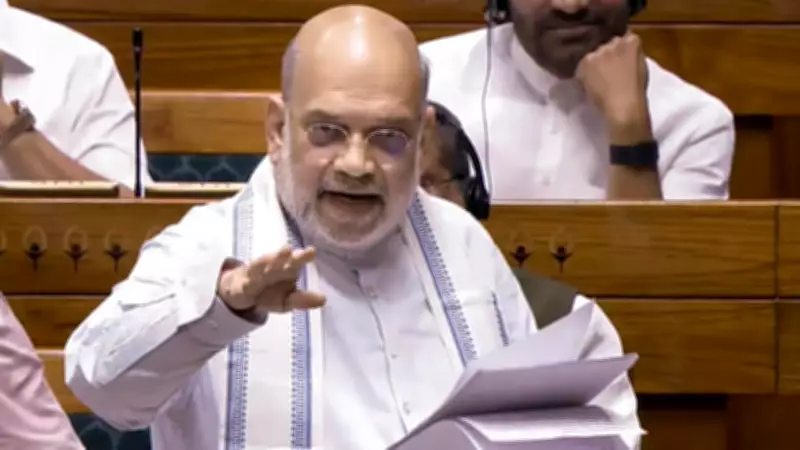
Amit Shah Counters Opposition Criticism on Women's Reservation Bill
Union Home Minister Amit Shah delivered a forceful response to opposition parties on Friday, addressing their criticism of the women's reservation bill and the proposed delimitation process. Speaking in the Lok Sabha ahead of the crucial voting on the landmark legislation, Shah accused the opposition of deliberately pushing what he termed a "north-south division narrative" to create regional tensions.
Equal Representation Across All States
Shah sought to rally parliamentary support for the bill while providing detailed clarifications about the delimitation process. "Let me make this clear once again: the southern states have exactly the same rights in this House as the northern states," he asserted emphatically. "In fact, even a small Union Territory like Lakshadweep has the same rights as Uttar Pradesh, Gujarat, and Bihar."
The Home Minister cautioned strongly against framing parliamentary representation in regional terms, warning that such approaches could fragment national unity. "This country should not be divided through such narratives, neither a North-South narrative nor any other divisive framing," Shah stated. "It should not be broken into pieces on such lines."

Constitutional Oath and National Responsibility
Addressing concerns about regional bias in parliamentary decision-making, Shah posed a rhetorical question: "What are they trying to imply? That members sitting in this House think about which state they come from while speaking or taking decisions?" He emphasized the solemnity of the parliamentary oath, stating, "When we take the oath, we do so with full sincerity and from the heart."
Shah further accused critics of misusing constitutional discourse for political purposes. "Those who have taken the constitutional oath in their hands are now trying to promote a North-South division narrative," he charged. "We will not allow this to happen..."
Statistical Evidence on Representation
Backing his arguments with detailed numerical data, the Home Minister presented calculations demonstrating that southern states would not lose parliamentary representation following delimitation. He specifically referenced five southern states:
- Karnataka
- Andhra Pradesh
- Telangana
- Tamil Nadu
- Kerala
"The strength of these five states in the 543 parliamentary seats is currently 129, which is 23.76%," Shah explained. "After a 50% increase, when we allocate the seats for these five states, it will rise from 129 to 195, which will represent 23.87% in 816 seats. No one will be at a loss."
Opposition Response and Counter-Criticism
While Shah presented the government's position, opposition leaders offered strong counter-arguments. Samajwadi Party supremo Akhilesh Yadav expressed skepticism about the ruling party's commitment to women's representation, stating, "Based on nearly 11 years of experience, even if the Bharatiya Janata Party (BJP) were to give a written assurance that they would appoint a woman Prime Minister, we still would not trust them..."
The parliamentary debate highlighted the political tensions surrounding the women's reservation bill, with the government emphasizing its commitment to fair representation across all regions while opposition parties questioned the implementation timeline and broader political intentions.






