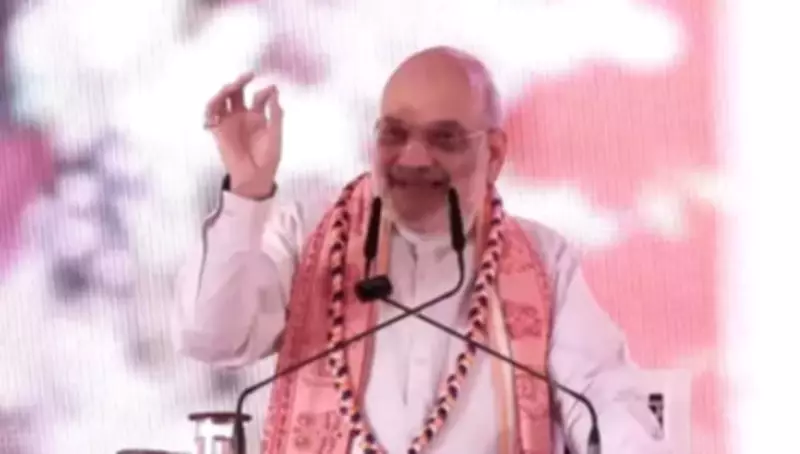
Amit Shah Honors Matua Community Icons and Bhakti Legacy in Mayapur Address
Union Home Minister Amit Shah delivered a significant address in Mayapur, West Bengal, on Wednesday, where he paid tribute to the foundational figures of the Matua community and celebrated the enduring influence of the Bhakti movement. Speaking before a gathered audience, Shah emphasized the historical contributions of Harichand Thakur and Guruchand Thakur, whose efforts have left an indelible mark on social welfare and equality in the region.
Praise for Matua Community's Social Reform Legacy
Amit Shah specifically highlighted the pivotal role played by Harichand Thakur and Guruchand Thakur in advancing social justice and community unity. "Harichand Thakur, Guruchand Thakur, and the broader Matua society have been instrumental in propelling the ideals of social welfare forward. They succeeded in uniting diverse segments of society through their visionary leadership," Shah stated during his speech.
The Home Minister elaborated on Harichand Thakur's courageous stand against the entrenched caste system and the practice of untouchability. He noted that Thakur's establishment of the Matua community represented a direct challenge to social hierarchies, particularly in advocating for the rights of the Namashudras. This resistance eventually catalyzed the Chandal movement in the 19th century, a landmark struggle for dignity and equality.

Shah also acknowledged the Matua community's ongoing contributions to education and gender equality, underscoring how these efforts continue to drive societal progress in southern Bengal and beyond.
Political Context and Community Outreach
Political observers interpreted Shah's remarks as a strategic outreach to the influential Matua Mahasangha, a community that holds considerable sway in numerous constituencies across southern Bengal. This engagement is viewed as particularly significant in the lead-up to upcoming assembly elections, where community support could prove decisive.
However, Bharatiya Janata Party sources were quick to clarify that the minister's visit to Mayapur was primarily religious in nature, not political. They emphasized that Shah's presence was tied to the 152nd birth anniversary celebrations of Bhaktisiddhanta Saraswati Thakur, the revered founder of 64 Gaudiya Maths globally.
Celebrating the Bhakti Movement and Its Modern Global Reach
In his address, Amit Shah extensively discussed the historical and contemporary significance of the Bhakti movement. He praised Bhaktisiddhanta Saraswati for his role in bridging traditional Bhakti spirituality with modernity, noting that while Sri Chaitanya Mahaprabhu originally spread the movement across eastern and northeastern India, Saraswati adapted its teachings for contemporary times.
Shah further highlighted the global impact of Gaudiya Vaishnavism, crediting Bhaktivedanta Swami Prabhupada, a disciple of Saraswati, with founding the International Society for Krishna Consciousness (ISKCON). This organization has played a crucial role in disseminating Bhakti principles worldwide, making the movement a truly international phenomenon.
"The epicenter of the Bhakti movement has always been in Nadia district, and I am confident that its message will continue to spread in the coming years. We are committed to sharing the ideals of Viksit Bharat and Sanatan Dharma with the entire world," Shah asserted, linking spiritual heritage with national development goals.
Personal Devotion and Message from PM Modi
Striking a personal note, Amit Shah clarified that he attended the event not in his official capacity as Union Home Minister, but as a devoted follower of Chaitanya Mahaprabhu. He expressed a long-held desire to visit Mayapur, acknowledging that circumstances had previously delayed his pilgrimage.
Shah also conveyed a heartfelt "Hare Krishna" greeting from Prime Minister Narendra Modi to the assembly, noting Modi's practice of presenting copies of the Bhagavad Gita to foreign dignitaries. This gesture, he explained, symbolizes the government's commitment to promoting India's spiritual and cultural heritage on the global stage.

The Home Minister's address in Mayapur thus served as a multifaceted tribute—honoring social reformers, celebrating religious legacy, and reinforcing cultural diplomacy, all while engaging with a key community ahead of electoral contests.