

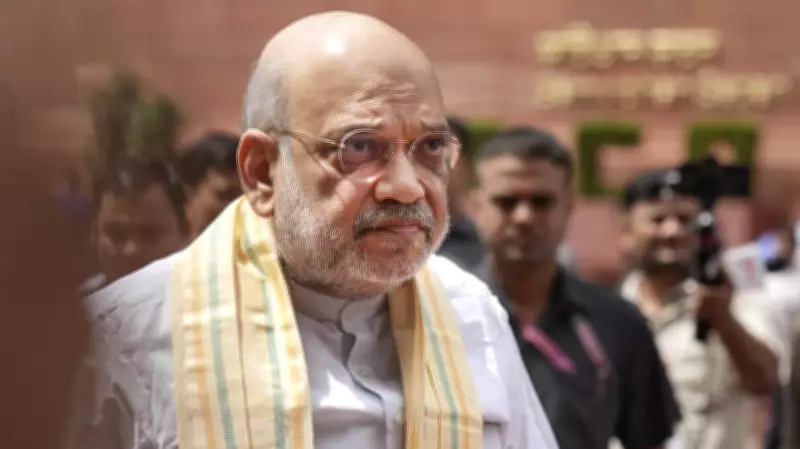
Amit Shah Challenges TMC Over SIR Implementation in West Bengal
Union Home Minister Amit Shah has launched a pointed critique against the Trinamool Congress (TMC), questioning why West Bengal appears to be the sole state raising objections to the Special Investigation Report (SIR) process. In a statement that has ignited fresh political tensions, Shah emphasized that the SIR is currently being conducted in three states governed by opposition parties, yet complaints are predominantly emanating from West Bengal.
Shah's Remarks on SIR and Opposition States
During a recent address, Amit Shah highlighted the broader context of the SIR, which is a governmental initiative aimed at reviewing and addressing specific administrative or legal matters. He pointed out that this process is not exclusive to West Bengal but is also underway in other opposition-ruled states. "Why only West Bengal has a problem with the SIR?" Shah asked, directly targeting the TMC leadership. He elaborated that the SIR is designed to ensure transparency and accountability, and its implementation should not be politicized.
Shah's comments come at a critical juncture, as West Bengal gears up for the Assembly Elections in 2026. The Bharatiya Janata Party (BJP), under Shah's guidance, has been actively campaigning to challenge the TMC's dominance in the state. By framing the SIR issue as unique to West Bengal, Shah aims to portray the TMC as obstructive and resistant to central government initiatives, potentially swaying voter sentiment.

Political Implications and TMC's Response
The TMC has historically been vocal in its criticism of central policies, often accusing the BJP-led government of overreach and interference in state affairs. In response to Shah's remarks, TMC leaders are expected to defend their stance, arguing that the SIR in West Bengal might involve specific local concerns or historical contexts that differ from other states. This exchange underscores the ongoing friction between the BJP and TMC, which has characterized Indian politics in recent years.
Analysts suggest that Shah's strategy is to highlight what he perceives as the TMC's inconsistency or selective opposition, thereby questioning the party's commitment to governance and public welfare. The debate over the SIR could become a focal point in the upcoming election campaigns, with both parties leveraging it to mobilize their support bases.
Broader Context of SIR in Opposition-Ruled States
It is important to note that the SIR is part of a nationwide effort, and its implementation in multiple opposition-ruled states indicates a non-partisan approach by the central government. However, the concentration of complaints from West Bengal raises questions about regional dynamics and political will. Shah's inquiry into this disparity seeks to put the TMC on the defensive, forcing them to justify their objections publicly.
As the political landscape heats up, stakeholders from various sectors, including civil society and media, are closely monitoring these developments. The outcome of this controversy could influence not only the electoral prospects in West Bengal but also the broader relationship between the center and states in India's federal structure.
In summary, Amit Shah's attack on the TMC over the SIR issue has added a new dimension to the pre-election rhetoric in West Bengal. By questioning why complaints are isolated to this state, he aims to undermine the TMC's credibility and bolster the BJP's narrative of effective and unbiased governance. The coming months are likely to see intensified debates and strategic maneuvers as both parties prepare for a high-stakes electoral battle.






