

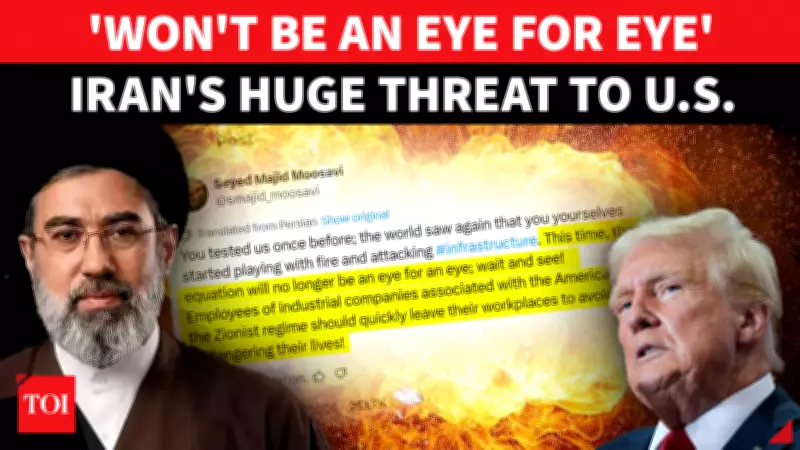
IRGC Escalates Regional Conflict, Targets U.S. and Israeli Industrial Infrastructure
In a significant escalation of regional hostilities, Iran's Islamic Revolutionary Guard Corps (IRGC) has issued a stark and direct warning, explicitly threatening key industrial infrastructure linked to the United States and Israel. This aggressive move comes as a direct response to recent Israeli airstrikes targeting suspected nuclear facilities within Iran, dramatically expanding the conflict zone beyond traditional military engagements.
Urgent Evacuation Orders Signal Imminent Strikes
The IRGC has publicly urged workers and personnel to evacuate industrial areas associated with American and Israeli interests immediately. This unprecedented directive strongly signals that retaliatory strikes on factories, economic hubs, and critical industrial sites are not only possible but potentially imminent. The warning transforms the nature of the conflict, placing civilian-adjacent economic assets squarely in the crosshairs.
This strategic shift marks a dangerous new phase, moving the confrontation from covert operations and military base exchanges to overt threats against economic stability and global supply chains. Analysts fear that targeting such infrastructure could cripple regional economies and have cascading effects worldwide.

Retaliation Underway as Conflict Expands
With retaliation already reportedly underway, the theater of conflict is broadening at an alarming rate. The IRGC's statement confirms that the scope of engagement is no longer limited to military or nuclear installations. Instead, it now encompasses the very economic foundations that support U.S. and Israeli interests in the region and beyond.
The explicit threat to industrial zones raises profound concerns about civilian safety, as these areas are often located near populated centers. Furthermore, attacks on ports, factories, and logistics hubs could severely disrupt trade routes through critical chokepoints like the Strait of Hormuz, impacting global energy supplies and maritime commerce.
Fears of a Wider Regional War Intensify
The IRGC's latest warning has exponentially increased fears that the ongoing conflict could spiral into a full-scale regional war. By threatening U.S. infrastructure directly, Iran is challenging a global superpower on a new front, increasing the risk of direct American military involvement beyond its current support role for Israel.
Key implications of this escalation include:
- Increased risk to international civilian workers and expatriates in Gulf states.
- Potential for catastrophic damage to global supply chains, particularly for oil and gas.
- Heightened probability of miscalculation leading to uncontrolled escalation.
- Greater strain on diplomatic efforts to de-escalate the situation.
The situation remains fluid and extremely volatile, with the international community watching closely as Iran demonstrates its willingness to expand the conflict in response to Israeli actions. The coming days will be critical in determining whether this threat materializes into action, potentially drawing more nations into a widening regional conflagration.






