

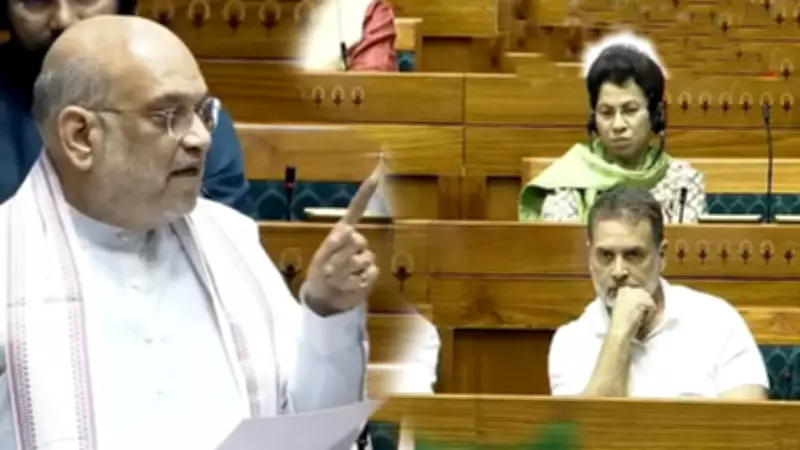
Amit Shah Delivers Forceful Rebuttal in Lok Sabha Over Speaker Motion
Union Home Minister Amit Shah launched a vigorous defense of Lok Sabha Speaker Om Birla on Tuesday, delivering a powerful rebuttal as the Opposition pushed forward with a rare no-confidence motion against the presiding officer of the House. In a speech that lasted over thirteen hours and saw participation from more than forty Members of Parliament, Shah described the move as both unprecedented and deeply unfortunate for India's parliamentary traditions.
Speaker's Chair Must Remain Above Political Battles
Amit Shah emphasized that the Speaker's chair represents the collective authority and dignity of the entire Lok Sabha, not any single political party. "The Speaker's position must remain elevated above the daily political skirmishes that characterize our democracy," Shah declared during the marathon debate. He reminded fellow parliamentarians of the symbolic moment when leaders from both treasury and Opposition benches had escorted Speaker Om Birla to the Chair together, demonstrating bipartisan trust and institutional respect.
Warning About Democratic Credibility
The Union Home Minister argued that while disagreements over specific rulings are an inherent and healthy part of parliamentary democracy, directly challenging the Speaker's neutrality through such motions could fundamentally weaken the credibility of Parliament itself. "When we attack the institution that maintains order and fairness in our debates, we risk damaging the very foundation of our democratic process," Shah cautioned lawmakers from both sides of the aisle.

Global Perception of Indian Democracy at Stake
Shah further issued a stern warning about the international implications of such parliamentary confrontations. He suggested that repeated challenges to the Speaker's authority might negatively affect how India's democratic institutions are perceived globally, potentially undermining the country's standing as the world's largest democracy. This concern about international reputation added a significant dimension to what has become a heated political battle between the ruling coalition and Opposition parties.
Political Battle Intensifies Over Parliamentary Traditions
The controversy has triggered intense political warfare, with the government accusing Opposition parties of undermining centuries-old parliamentary traditions and decorum. Meanwhile, Opposition leaders have defended their no-confidence motion as a legitimate exercise in accountability and oversight. They argue that holding the Speaker answerable to the House represents democracy in action rather than an attack on institutions.
The extended debate highlighted several critical aspects of India's parliamentary democracy:
- The rare nature of no-confidence motions against Speakers in Indian parliamentary history
- The delicate balance between political accountability and institutional respect
- The symbolic importance of bipartisan gestures in parliamentary proceedings
- The potential consequences for India's global democratic reputation
As the political confrontation continues to unfold, both sides remain entrenched in their positions, with the government maintaining that the Speaker's neutrality must be preserved at all costs, while the Opposition insists that parliamentary officers must remain accountable to elected representatives. The outcome of this rare motion could set important precedents for future parliamentary conduct in India's vibrant democracy.






