

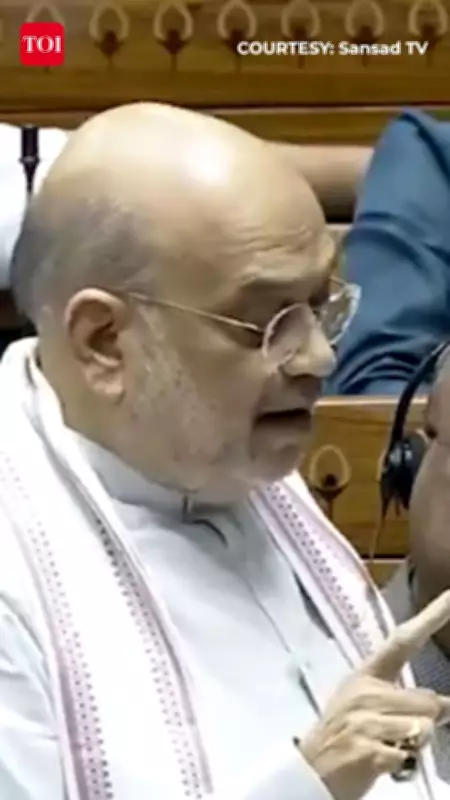
Amit Shah's Fiery Exchange with Opposition in Lok Sabha
Union Home Minister Amit Shah delivered a sharp retort to protesting opposition members in the Lok Sabha on Wednesday, telling them "Suno, ab sunna padega" (Listen, now you must listen) as he presented the attendance record of Leader of Opposition Rahul Gandhi. The tense moment unfolded during parliamentary proceedings, highlighting the ongoing political confrontation between the government and opposition.
Shah Presents Rahul Gandhi's Attendance Record
As opposition MPs raised slogans and created disruptions, Amit Shah stood firm and began reading out Rahul Gandhi's attendance statistics from the 15th to the 17th Lok Sabha. The Home Minister insisted that the House listen carefully to the data he was presenting, leading to his forceful statement that quickly became the focal point of the session.
The exchange triggered loud protests from opposition benches, with members expressing their displeasure at Shah's approach. The atmosphere in the Lok Sabha grew increasingly tense as both sides engaged in verbal sparring, reflecting the broader political divide that has characterized the current Parliament session.

Escalating Political Confrontation
This incident represents another chapter in the ongoing political confrontation between the ruling government and opposition parties. The moment drew immediate attention from political observers and media outlets, with many viewing it as symbolic of the heightened tensions in Indian parliamentary democracy.
The confrontation occurred during a session that has seen multiple clashes between government and opposition members on various issues. Political analysts note that such exchanges have become increasingly common as both sides position themselves ahead of upcoming political challenges.
Parliamentary Proceedings Disrupted
The loud protests that followed Shah's statement temporarily disrupted parliamentary proceedings, forcing the Speaker to intervene and restore order. This incident highlights the challenges facing parliamentary decorum and the difficulty of conducting legislative business amid heightened political polarization.
Observers of Indian politics note that such confrontations, while disruptive, have become a regular feature of parliamentary sessions, particularly when sensitive political issues are being discussed or when personal records of prominent leaders are brought into question.
The exchange between Amit Shah and opposition members will likely be analyzed and discussed extensively in political circles, with both sides using it to reinforce their respective narratives about parliamentary conduct and political accountability.






