

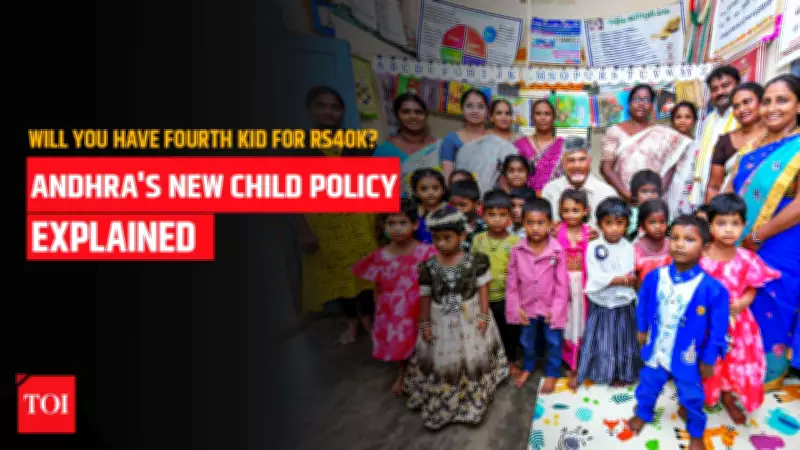
Andhra Pradesh chief minister Chandrababu Naidu has urged people of the state to have larger families. He has proposed Rs 25,000 for a second child, Rs 30,000 for a third along with free education till 18 years of age, and Rs 40,000 for a fourth. He also suggested opening of fertility clinics. This has sparked a debate, not merely about demographics, but also about gender and women safety.
The incentives are aimed at addressing the state's declining fertility rate. However, critics argue that the financial rewards are insufficient to cover the actual costs of raising children. Women's rights activists point out that such policies often place the burden of childbearing on women, without corresponding support for healthcare, childcare, or career continuity.
Moreover, the proposal to open fertility clinics raises ethical concerns. While it may help couples struggling with infertility, there is fear that it could lead to pressure on women to undergo medical procedures for the sake of meeting demographic targets. The debate also touches on broader issues of women's autonomy and safety in a state that has seen high rates of violence against women.

Supporters of the policy argue that it is necessary to prevent an aging population and ensure economic growth. They highlight that similar incentives have been tried in other countries with mixed results. The long-term impact of such measures remains to be seen, but the discussion has already brought to light the complex interplay between population policy, gender equality, and social welfare.






