

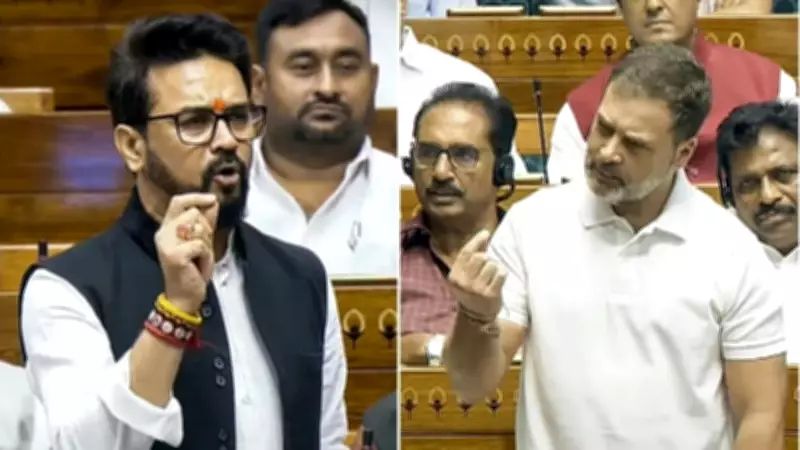
BJP's Anurag Thakur Launches Scathing Attack on Rahul Gandhi in Parliament
The Lok Sabha witnessed yet another intense political confrontation on March 11, 2026, as Bharatiya Janata Party MP and Union Minister Anurag Thakur delivered a blistering speech targeting Congress leader Rahul Gandhi. Thakur's remarks, which quickly went viral, included the provocative nickname "FOMO Gandhi" and the label "Leader of Propaganda" for the Opposition MP.
Accusations of Parliamentary Norm Violations
During his address, Thakur accused Rahul Gandhi of repeatedly violating established parliamentary procedures and creating unnecessary disruptions in the House. The BJP leader emphasized that parliamentary proceedings must adhere to constitutional rules rather than being influenced by external "toolkits" or political agendas.
"The dignity and decorum of this House cannot be compromised for political theatrics," Thakur asserted, directly criticizing Gandhi's conduct during sessions.

Mocking the 'FOMO Gandhi' Phenomenon
Thakur's most memorable barb came when he coined the term "FOMO Gandhi" to describe Rahul Gandhi's political approach. FOMO, an acronym for "Fear Of Missing Out," was used by Thakur to suggest that Gandhi fears missing media headlines and public attention.
"We have a new phenomenon in Indian politics - FOMO Gandhi," Thakur remarked sarcastically. "Someone who remains conspicuously silent during crucial parliamentary debates but suddenly becomes vocal during foreign visits and media interactions."
Criticism of Congress's Procedural Understanding
The BJP MP also targeted the Congress party's institutional knowledge, pointing to what he described as procedural errors in their notice against Lok Sabha Speaker Om Birla. Thakur claimed these mistakes exposed the party's "lack of procedural understanding" despite having governed India for decades.
"It's astonishing that a party with such extensive parliamentary experience continues to make basic procedural errors," Thakur stated, questioning the Congress's commitment to parliamentary norms.
Allegations of Selective Outrage
Thakur further alleged that Rahul Gandhi demonstrates a pattern of remaining silent during domestic parliamentary sessions while making controversial statements during international visits. This criticism implied that Gandhi prioritizes international media attention over substantive participation in India's legislative processes.
Political Fallout and Escalating Tensions
The sharp exchange has intensified the ongoing confrontation between the ruling BJP and the Opposition in Parliament. Political observers note that such heated debates reflect the deepening polarization in Indian politics as both parties prepare for future electoral battles.
Thakur's remarks have triggered widespread discussion across political circles and social media platforms, with many analysts viewing them as part of a broader strategy to undermine the credibility of the Congress leadership while reinforcing the BJP's narrative about parliamentary discipline.
The incident underscores the increasingly combative nature of parliamentary politics in India, where personal attacks and provocative labels have become common tools in political discourse. As both parties dig in their positions, the prospects for constructive legislative cooperation appear increasingly challenging in the current political climate.






