Army Chief General Upendra Dwivedi Unveils Details of Operation Sindoor
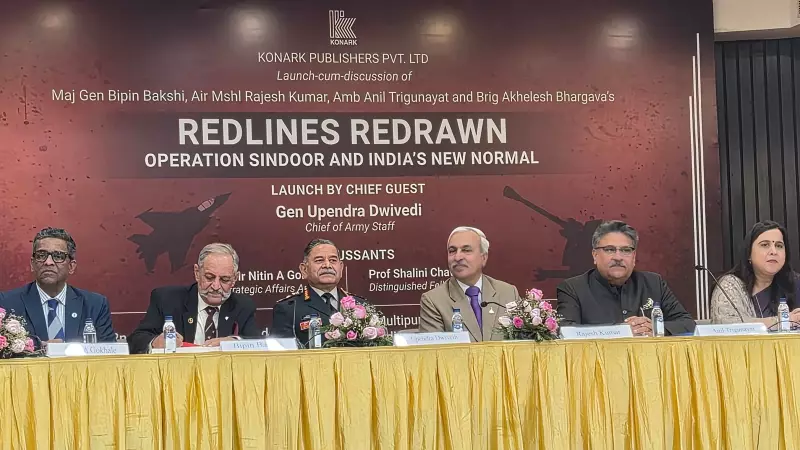
In a significant revelation, Army Chief General Upendra Dwivedi has disclosed the precise timeline and strategic background of Operation Sindoor, a critical military action conducted by India in response to the Pahalgam terrorist attack. Speaking at a book launch event in New Delhi on Thursday, General Dwivedi provided insights into the planning and execution phases of this operation, which he described as one of the most consequential in recent history.
Timeline and Initiation of Operation Sindoor
General Dwivedi stated that Operation Sindoor was formally assigned to the Army on April 29 or 30, 2025, just a week after the devastating Pahalgam terrorist attack occurred on April 22, 2025. He emphasized that this assignment was kept confidential and not publicized in the media at the time. The operation itself was carried out another week later, on May 7, 2025, marking a swift and decisive response to the terror incident.
Recalling the moment he received the news of the Pahalgam attack, General Dwivedi shared a poignant anecdote. He was in the middle of addressing a seminar for retiring officers when then Director General of Military Operations (DGMO) Rajiv Ghai entered the room with a subtle warning. "When the DGMO says 'chhota sa', you can make out there must be something more," he remarked, highlighting the understated yet urgent nature of military communications. The Northern Army Commander, who was also present, immediately understood the gravity of the situation and left to address the emerging crisis.

Synergistic Approach and Execution
Operation Sindoor was characterized by a highly coordinated effort involving all three branches of the Indian armed forces. General Dwivedi detailed that at 0147 hours in the operations room, a collaborative setting included Army, Air Force, and Naval personnel, alongside members of the diplomatic corps. This joint synergistic approach was pivotal to the success of the operation, ensuring precision and efficiency in the strikes.
The operation involved the destruction of nine targets through 22 minutes of precision non-escalatory strikes, which were broadcast globally on television screens. General Dwivedi noted that the world witnessed how credible evidence and a truth-based narrative played a crucial role in establishing India's stance, ultimately leading to a favorable outcome in the long run.
Strategic Implications and Learnings
Reflecting on the broader implications, General Dwivedi pointed out that Operation Sindoor challenged previous assumptions about India's decision-making and mobilization cycles. "The old assumption that India requires a long time for decision-making as also a long drawn mobilisation cycle to synchronise force application was quietly thrown out of the window," he said. This operation demonstrated a shorter decision-making loop, underscoring the political will and agility behind India's military responses.
However, the Army Chief also highlighted key learnings from the operation, stressing the importance of supply chain resilience. He advocated for atma nirbharta (self-reliance) as the only sustainable solution for India's long-term security needs, urging careful management of supply chains to enhance national defense capabilities.
Book Launch and Historical Context
The event marked the launch of Red Lines Redrawn: Operation Sindoor and India's New Normal, a book authored by Maj Gen Bipin Bakshi, Air Mshl Rajesh Kumar, Amb Anil Trigunayat, and Brig Akhelesh Bhargava. This publication delves into the planning rooms and operational environment of the 88-hour operation launched against Pakistan, providing an in-depth analysis of the strategic maneuvers and diplomatic efforts involved.
General Dwivedi's remarks not only shed light on the operational details but also reinforced the significance of such military actions in shaping India's defense narrative. The discussion at the book launch served as a platform to revisit and appreciate the complexities and successes of Operation Sindoor, offering valuable lessons for future security strategies.