

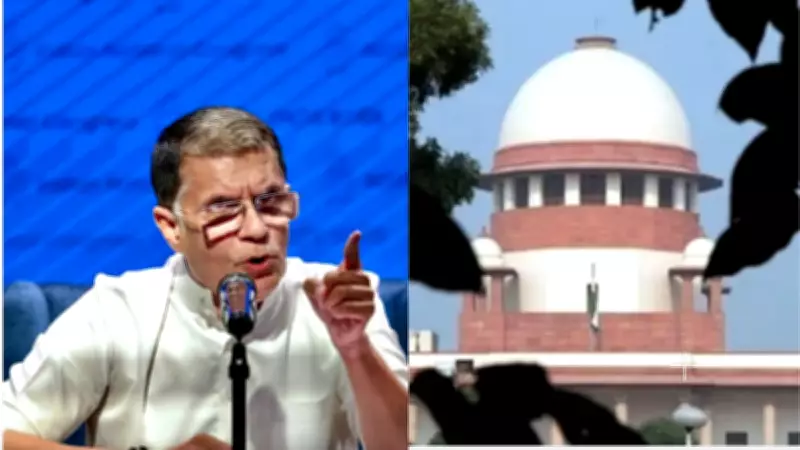
Assam Government Escalates Legal Battle Against Congress Leader Pawan Khera
The Assam government has taken a decisive legal step by moving the Supreme Court to challenge the anticipatory bail granted to senior Congress leader Pawan Khera. This development marks a significant escalation in the ongoing political and legal confrontation between the ruling Bharatiya Janata Party (BJP)-led state administration and the opposition Congress party.
Background of the Controversial Allegations
The controversy stems from serious allegations made by Pawan Khera on April 5, 2026. During a public statement, the Congress leader claimed that Assam Chief Minister Himanta Biswa Sarma's wife, Riniki Bhuyan Sarma, possesses multiple passports and holds foreign property assets. Khera further asserted that these assets were not declared in the chief minister's election affidavit submitted for the crucial April 9 Assembly polls in Assam.
These accusations have ignited a fierce political firestorm, with the Congress party demanding transparency and accountability from the chief minister regarding his family's financial disclosures. The allegations specifically target the integrity of the election affidavit, a document legally required to provide a comprehensive account of a candidate's assets and liabilities.

Legal Proceedings and the State's Supreme Court Petition
Following Khera's allegations, the Assam government initiated legal action against the Congress leader. The state's law enforcement agencies sought his arrest in connection with the case. However, a lower court granted anticipatory bail to Pawan Khera, providing him temporary protection from arrest while the investigation proceeds.
Dissatisfied with this judicial decision, the Assam government has now approached the Supreme Court, India's highest judicial authority. The state's petition argues that the grant of anticipatory bail was improper and seeks its cancellation. Legal experts suggest that the government's move indicates a determination to pursue the case vigorously, potentially viewing Khera's statements as defamatory or legally actionable under relevant statutes.
Political Implications and Broader Context
This legal maneuver occurs against the backdrop of heightened political tensions in Assam, a state with a history of intense electoral competition. The April 9 Assembly elections are pivotal, and allegations of undisclosed assets involving a chief minister's family can significantly influence public perception and voter sentiment.
- The Congress party has positioned Khera's allegations as a fight for electoral integrity and transparency in public life.
- The BJP and Assam government have consistently denied the claims, labeling them as politically motivated attempts to tarnish the chief minister's reputation.
- Legal analysts note that the Supreme Court's eventual ruling on the anticipatory bail challenge could set important precedents for similar cases involving political figures and allegations of financial non-disclosure.
The case also raises broader questions about the scrutiny of election affidavits and the mechanisms for verifying the asset declarations of high-profile candidates. As the Supreme Court considers the Assam government's petition, all eyes are on the judiciary's role in balancing legal procedures with political accountability in a charged electoral environment.






