

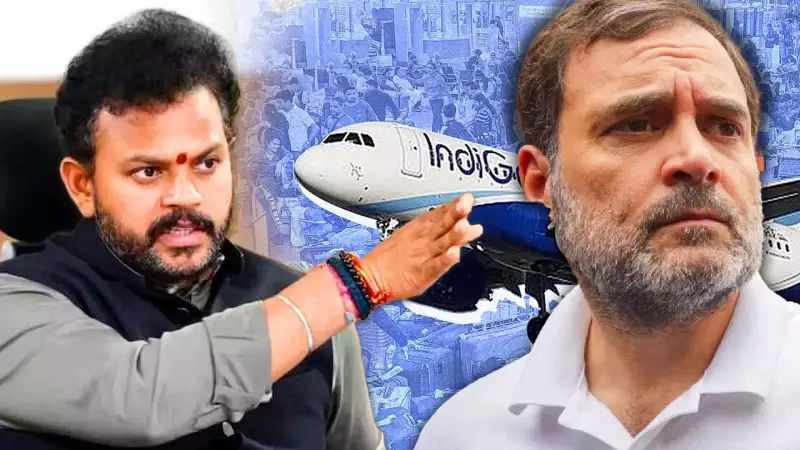
India's aviation sector is facing intense political turbulence as the ongoing operational crisis at budget carrier IndiGo enters its sixth consecutive day. The situation has sparked a sharp war of words between the government and the opposition, with thousands of passengers nationwide caught in the crossfire of delayed and cancelled flights.
Political Clash Over Aviation Policy
Congress leader Rahul Gandhi launched a direct attack on the government's handling of the aviation sector, blaming the widespread travel disruptions on what he termed a "monopoly model" being promoted by the ruling administration. He argued that this approach was making ordinary Indians suffer through immense inconvenience and financial loss.
In a swift and firm rebuttal, Civil Aviation Minister Ram Mohan Naidu countered these allegations. Speaking on December 7, 2025, Naidu asserted that the government has consistently worked to foster greater competition, not monopoly, in Indian skies. He pointed to recent legislative measures aimed at reducing aircraft leasing costs, a move specifically designed to help airlines expand their fleets and ensure a healthier, more competitive market.

Government's Stance and Passenger Plight
Minister Naidu emphasized that the focus should remain on resolving the immediate crisis and assisting stranded travelers, rather than politicizing the issue. "Our priority is improving aviation reliability and public convenience," he stated, reaffirming the government's commitment to passenger welfare.
However, on the ground, the reality remains grim for countless flyers. With the IndiGo fiasco stretching through nearly a week, airports across the country continue to report scenes of chaos. Passengers are dealing with last-minute cancellations, indefinite delays, and a scramble for alternative travel arrangements, leading to significant distress and financial hardship.
The Road Ahead for Indian Aviation
This incident has thrown a spotlight on the structural challenges and policy debates within India's aviation industry. While the minister highlighted pro-competition policies like the aircraft leasing law, the opposition insists that market concentration remains a critical problem. The debate centers on whether the current ecosystem allows for robust competition or inadvertently favors dominant players.
As authorities work with the airline to restore normal operations, the political discourse underscores a deeper conflict over the vision for India's transportation future. The outcome of this policy debate will have lasting implications for airline viability, ticket pricing, and ultimately, the experience of the millions of Indians who take to the skies each year.






