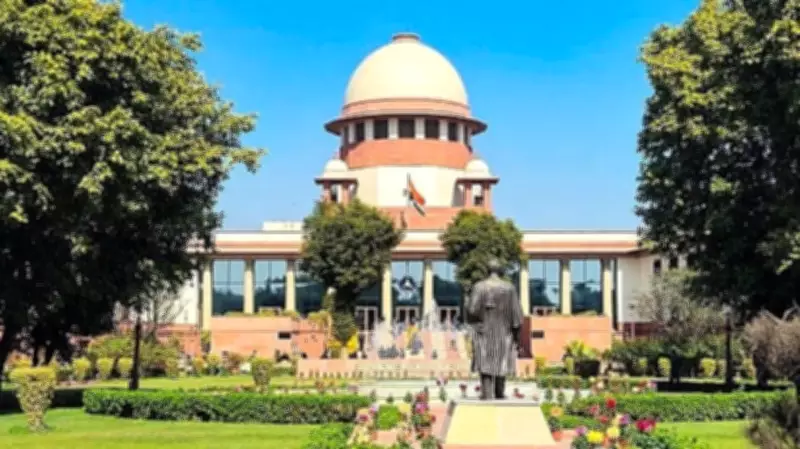
The Supreme Court of India has once again affirmed the fundamental principle that bail is the rule and jail is the exception, even in cases involving stringent laws like the Unlawful Activities (Prevention) Act (UAPA). The apex court granted bail to an accused in a narco-terror case, which is currently under investigation by the National Investigation Agency (NIA).
Background of the Case
The case was registered in 2020 under relevant sections of the UAPA and the Indian Penal Code (IPC). The NIA has been probing the matter, which involves allegations of narco-terrorism—a term used to describe the use of drug trafficking to fund terrorist activities. The accused had been in custody since the filing of the case and had sought bail from the Supreme Court after lower courts denied relief.
Supreme Court's Observations
A bench of the Supreme Court, while granting bail, emphasized that the presumption of innocence remains paramount and that stringent provisions of UAPA do not automatically negate the right to bail. The court noted that the accused had been in jail for a considerable period and that the trial was likely to take time. It further observed that the mere invocation of UAPA cannot be a ground to deny bail if the facts of the case do not warrant prolonged detention.

The bench stated: "Bail is the rule, and jail is the exception. This principle applies even to cases under special statutes like UAPA. The courts must balance the severity of the allegations with the fundamental rights of the accused."
Legal Implications
The ruling reinforces the judiciary's stance on protecting individual liberty, even in cases involving national security. Legal experts believe that this judgment will guide lower courts in dealing with bail applications under UAPA and similar anti-terror laws. The Supreme Court has consistently held that the power to grant bail must be exercised judiciously, and that prolonged incarceration without trial amounts to a violation of Article 21 of the Constitution.
Reaction from Legal Fraternity
Senior advocates and human rights activists have welcomed the decision, calling it a reaffirmation of constitutional values. They argue that the UAPA, which has often been criticized for its stringent bail provisions, should not be used as a tool to indefinitely detain individuals. The NIA, on the other hand, had opposed the bail plea, citing the gravity of the offense and the potential threat to national security.
Conclusion
The Supreme Court's judgment serves as a reminder that the right to a speedy trial and personal liberty cannot be sacrificed at the altar of stringent laws. While the court acknowledged the seriousness of narco-terrorism, it held that the accused's right to bail must be considered on its own merits. The case will now proceed to trial, with the accused out on bail subject to conditions imposed by the court.