

Migrants Scramble to Return Home as Bengal Polls Loom Amid Electoral Roll Concerns
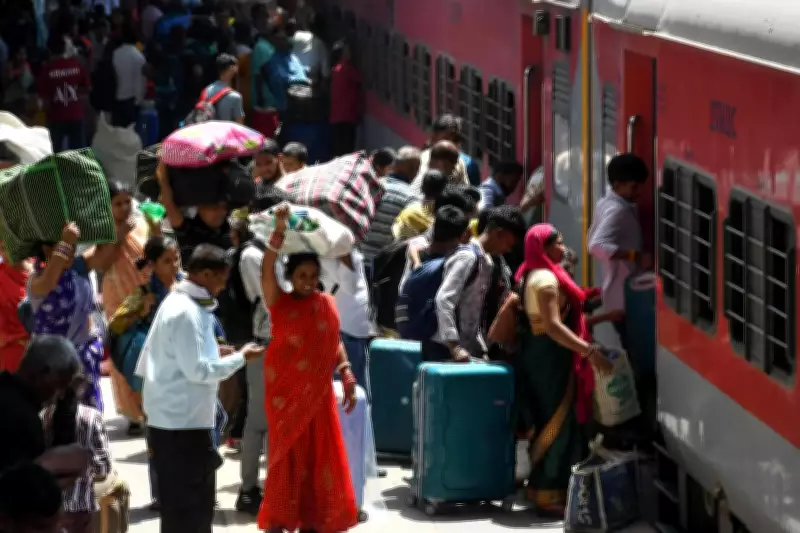
In the chaotic swirl of New Delhi Railway Station, Manju Jana, a 55-year-old from Nandigram in West Bengal, stands bewildered on a heaving platform. Her limited grasp of Hindi makes navigating the tumult even more daunting. Clutching her bags tightly, she scans a packed general coach where her husband and young son have managed to squeeze in. Around her, the station surges with Bengali migrant families—factory workers, construction laborers, and domestic helps—all jostling through the crowd, many without confirmed tickets, desperate to board overcrowded trains bound for poll-bound West Bengal.
A Journey Driven by Fear and Urgency
With children balanced precariously on hips and bags piled high on their heads, these migrants race against uncertainty and time. Their urgency is singular: to return home and ensure their votes are counted, amid growing fears and confusion surrounding the Special Intensive Revision (SIR) of electoral rolls. For these migrants, the revision is more than just an electoral update; it has become a source of deep anxiety. While there is no official confirmation linking SIR to citizenship, the scale of deletions has unsettled many.
The exercise began in Bengal on November 4, 2025, and a draft roll released on December 16 excluded over 58 lakh names marked as ‘absent’, ‘shifted’, ‘dead’, or ‘duplicate’. When this number later rose to 63 lakh, it sent ripples of anxiety across communities living far from the state. For many people from Bengal working in Delhi-NCR, these figures translate into a fear of being erased from the system altogether.

Personal Stories Highlight the Struggle
Today, as they navigate overcrowded railway platforms and embark on uncertain journeys, their return home is not just about exercising their franchise. It is about being counted, about not slipping through the cracks of a system they barely understand but deeply fear. This fear is prompting lakhs like Baneshwar Adak to scamper home. The 42-year-old steel factory worker from Ashok Vihar is travelling with family members to Bengal’s Medinipur, even as the cost of the journey weighs heavily on him.
“My name was struck off the list, so I registered again as a new voter,” he explains, wiping sweat from his furrowed forehead as he shifts on the platform to dodge the afternoon sun. Despite paying over Rs 20,000—nearly two-thirds of his monthly income—for his family on the Duronto Express to Howrah, the uncertainty doesn’t end there. “Our return ticket isn’t confirmed yet, though I have to be back in Delhi by the end of this month.”
Domestic Workers Risk Livelihoods for Identity
The buzz of a temporary “exodus” of domestic workers from Delhi-NCR ahead of the Bengal polls resonates throughout New Delhi station. Shamin and his sisters, domestic workers in Delhi heading to South 24 Parganas district, risk losing their jobs by making the trip to Bengal, having moved to the capital just a year ago.
“In view of the SIR, our parents told us to rush to Bengal, fearing our names would be struck off the rolls in future if we don’t vote this time,” Shamin says, though there’s no government directive stating so. Without paid leave and with employers reluctant to accommodate sudden absences, their journey is a gamble between livelihood and identity.
Chaos and Frustration at the Station
The rush of migrants is evident across New Delhi station. At gate number 11, Abdul Mateen, an RPF member, tries hard to control the swell, stopping those without tickets even as crowds from behind push the queue forward. “We are doing our best to regulate the passengers and help find coaches and seats,” he says.
However, once inside the station, the semblance of order quickly dissolves into chaos. People squat on the floor of the platforms in the sweltering heat, guarding their ‘spots’, ready to charge as soon as their trains pull in, hoping to somehow make it inside. This scramble for space frustrates passengers like Jolodhor Shahu, a tailor in a Noida garment factory, who moves along the platform with his family of six, scanning for seats in a general compartment that’s already packed to the doors.

“The least the railways could have done was add more coaches,” he laments. “We can’t afford sleeper tickets, and there’s no alternative.” Nearby, Falguni Khara, a domestic worker heading to Purulia, clutches her bags and tickets. “We could get only one confirmed seat for the three of us. Only God knows what the next 24 hours have in store for us,” she says.
Voting as a Non-Negotiable Exercise
With fears that access to benefits like ration cards and government welfare schemes is tied to their presence on electoral rolls, casting one’s vote now feels like a non-negotiable exercise. The lack of clarity around SIR has only deepened this perception. Meanwhile, Manju Jana is still waiting on the platform, eyes fixed on the coach where her family has seemingly found a foothold.
“Jete to hobei, she je bhabei hok (we have to go, by hook or by crook),” she says softly yet firmly, as if speaking for her fellow migrants desperately trying to reach Bengal just in time for the first phase of polls on April 23.





