A unique petition before the Supreme Court has ignited a fresh debate on citizenship and political rights in India. The plea argues that those who have applied for citizenship under the Citizenship Amendment Act (CAA) should be granted voting rights while their applications are processed. The petitioners contend that the receipt for a CAA application should be treated as a provisional citizenship document, embodying a characteristically Indian approach: not letting the wait for bureaucratic paperwork hinder fundamental political participation.
The Enduring Crisis of 'Kagaz'
The central theme of this saga is the power—and powerlessness—of documents. From 2013 to 2019, when Supreme Court judges Ranjan Gogoi and Rohinton Nariman monitored the National Register of Citizens (NRC) in Assam, millions found themselves in a bind, summed up by the phrase "kagaz hai nahi, kya dikhaye" (have no documents to show). Later, during protests against the CAA in 2019, the rallying cry was "kagaz nahi dikhaenge" (won't show documents). Today, for hundreds of Bengali Muslims detained over several months in states like Haryana, Gujarat, Maharashtra, Delhi, Rajasthan, and Odisha, the bitter reality is "kagaz kisi kaam ke nahin" (documents are no protection).
Aside from a rare case of a Bengali Muslim contractor with a passport fighting his detention in the Bombay High Court, most of those rounded up are labourers, waste collectors, and ragpickers. One such ragpicker is Sunali Khatun, picked up by Delhi Police, whose plight underscores a systemic vulnerability. This situation, however, is not unexpected. To comprehend why Bengali Muslim migrants are in the crosshairs, one must journey through Assam and West Bengal.

The Assam Model and the Bengal Paradox
In Assam, politics has long been shaped by fears of a 'demographic invasion' by Bengalis, perceived as a threat to Assamese culture and language. This hostility targeted all Bengalis from Bangladesh, both Hindu and Muslim. The CAA 2019 dramatically altered this landscape, overnight turning allegedly 'illegal' Bengali Hindus into foreigners entitled to citizenship, while their Muslim counterparts remained branded as 'infiltrators'.
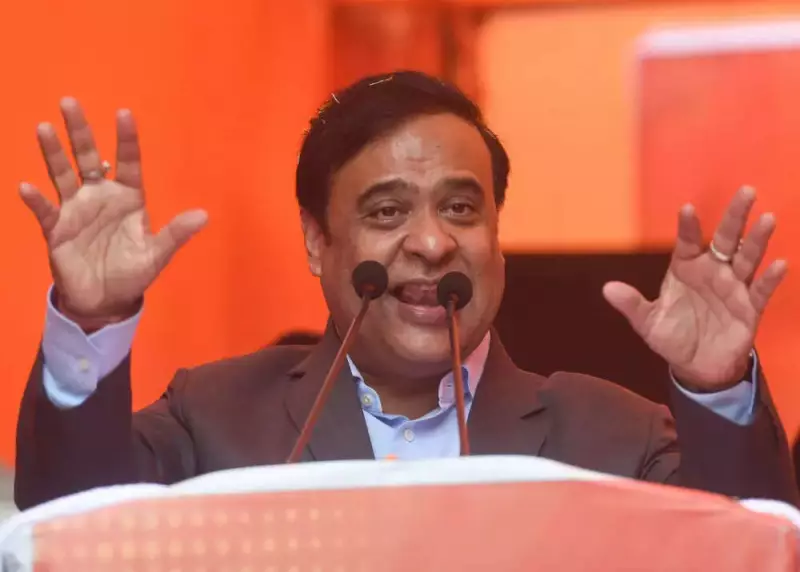
This shift caused friction. Recently, the All Assam Students' Union (AASU) protested a directive from Chief Minister Himanta Biswa Sarma to withdraw citizenship-related cases against illegal Hindu migrants. Following the CAA notification, Assam revived a 1950 expulsion law to push accused Bengali Muslims into Bangladesh, irrespective of their ongoing tribunal cases. A district collector can unilaterally declare a Bengali Muslim to be from Bangladesh, with no accountability for errors. As the CM admitted, some were wrongly pushed back despite pending High Court cases, only to be brought back later.
Over the last two years, the BSF and authorities have similarly 'pushed back' over 2,000 Bengalis identified by name and ethnicity into Bangladesh, leaving many stranded.
In West Bengal, the 'demographic invasion' narrative has found resonance among sections of Calcutta's elite. Bengali Muslims constitute 27% of the state's population, about 2.5 crore people as per the 2011 Census. Driven by poverty, they, like their Hindu neighbours, migrate for work. Globally, Bengalis form the second-largest ethnic bloc of Muslims, and 70% of Bengalis worldwide are Muslim. This reality clashes with the pan-India perception of the 'Indian Bengali' as an upper-caste bhadralok. Consequently, the impoverished Muslim Bengali is often viewed as 'Bangladeshi,' making them targets of suspicion in destination states, while Bengali Hindu migrants find relative safety.

The Legal Labyrinth and Shifting Goalposts
The core dilemma is proving one is not an 'infiltrator.' Over two decades, legislative changes—from Vajpayee's 2003 amendments to Modi's 2015, 2019, and 2025 revisions—have made Indian citizenship a right that is hard to defend if the state labels you an 'illegal immigrant.' Documents matter only if they meet a dizzying array of cut-off dates that shift with political exigency. For instance, Aadhaar, PAN, voter ID, or a passport issued after a certain date are insufficient unless linked to pre-cutoff 'legacy records,' a confusing and often unattainable requirement for many.
The focus on Bengali Muslim migrants intensified after March 2024, when CAA rules were notified. This was further strengthened by the new Immigration & Foreigners Act passed by Parliament in April 2025, which replaced four older laws. This law empowers police officers not below the rank of head constable to arrest anyone without a warrant on suspicion of being an 'illegal immigrant.'
In a significant move this July, the Election Commission claimed the right to decide if a voter could be an 'illegal immigrant,' conducting special intensive revisions of voter rolls. While 'illegal immigrant' is viewed through a national security prism, no Indian law defines 'refugee,' leaving countless vulnerable people in legal limbo.
An Unaccountable Trauma and Political Conjecture
The scale of illegal migration remains a matter of political conjecture, as Bangladesh has never conceded to a large-scale border crossover, making formal 'deportation' impossible. There have been reports of Indians being wrongly dumped in Bangladesh. The trafficking of women for low-paying jobs remains an invisible crisis.
The issue is deeply political. With three major politicized events lined up for 2026-2027—the Election Commission's 'purified' voter roll revision, state assembly elections, and the Census enumeration—the theme of 'demographic invasion' risks 'othering' Bengali Muslims entirely. For people like Sunali Khatun, there is no accountability for the trauma endured. The Government of India states that those who contribute to nation-building are welcome, and trouble-makers are not. The tragic irony rests on head constables to parse whether a ragpicker like Sunali Khatun, by collecting waste, is building the nation or not.