

Trans and Queer Communities in Bengal Launch Campaign Against Voter Exclusion
Alarmed by the failure of the ongoing Summary Revision of Electoral Rolls (SIR) to protect the constitutional voting rights of trans and queer individuals, members of these communities in West Bengal have initiated an online signature campaign. This effort aims to halt the disenfranchisement of trans-queer voters, highlighting systemic issues in the electoral process.
Widespread Deletions from Draft Electoral Rolls
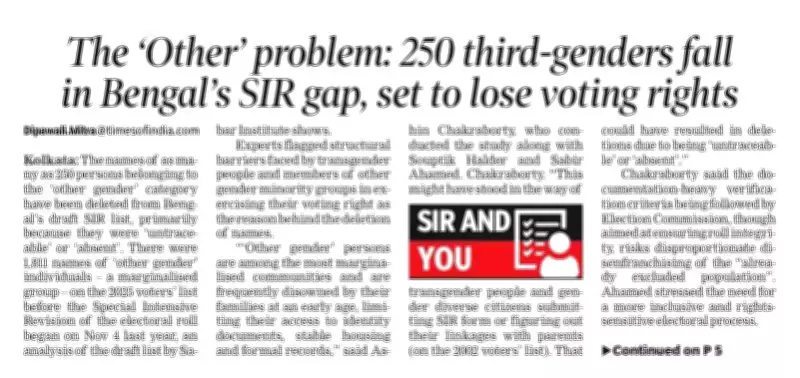
According to reports, the names of approximately 250 persons from the 'other gender' category were removed from Bengal's draft SIR list, out of a total of 1,811 individuals in this category. The deletions were primarily justified on grounds such as being 'untraceable' or 'absent,' raising concerns about inclusivity and fairness.
The campaign statement emphasizes, "For many of us, this exclusion is not accidental but predictable." It notes that activists had previously submitted written representations to the Election Commission of India (ECI), urging for processes that acknowledge the lived realities of queer and trans people, especially those lacking stable family connections or formal documentation. Despite assurances from officials, no substantive policy changes were implemented to prevent such disenfranchisement.

"Our right to vote is fundamental. Exclusion from the voter rolls is not just bureaucratic oversight — it is social erasure. We demand our rights as voters and citizens of this country," the campaign asserts, underscoring the gravity of the situation.
Campaign Demands and Community Response
By Tuesday evening, the campaign had gathered over 214 signatures. It calls on the ECI to take immediate action, including ensuring the inclusion of all queer and trans persons in the final electoral roll, establishing safe and community-centered hearing mechanisms that avoid requiring individuals to return to environments associated with past violence, and publishing transparent data on the number of affected persons to facilitate corrective measures.
Koyel Ghosh of Sappho for Equality pointed out a core flaw in the SIR process: its heavy reliance on traditional concepts of address, parental linkage, and outdated documentation, which many queer and trans individuals do not have. "Countless members of our community were forced to leave their natal homes due to social stigma or direct violence," Ghosh explained, highlighting the practical barriers faced.
Trans rights activist Sintu Bagui added, "A significant number of eligible trans voters did not appear for hearings out of fear, as they had to be physically present at locations close to their natal homes from where they were driven away." This fear factor further exacerbates the exclusion.
Queer trans rights activist Soham Basu criticized the process, stating, "The SIR process is systematically silencing the voices of the marginalised." This sentiment reflects broader concerns about how electoral systems can inadvertently perpetuate social inequalities.
Broader Implications and Call for Action
The campaign underscores the urgent need for electoral reforms that are inclusive and sensitive to the unique challenges faced by trans and queer communities. By addressing these issues, it aims to safeguard democratic participation and uphold the constitutional rights of all citizens, regardless of gender identity or sexual orientation.






