

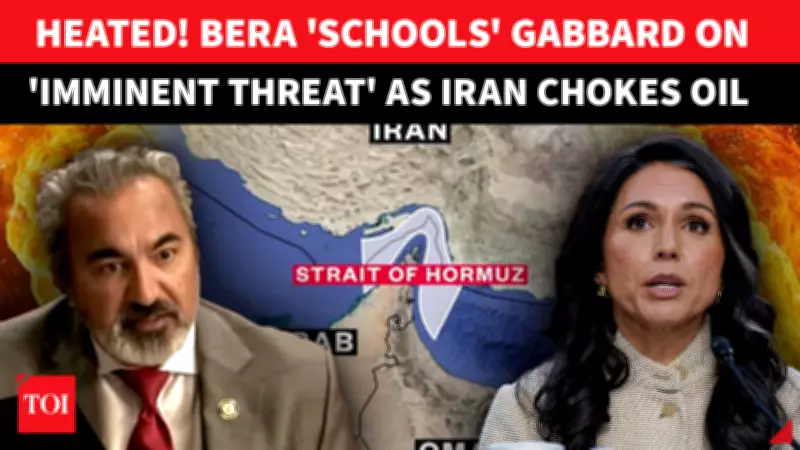
Congressional Hearing Erupts Over Iran War Intelligence
In a tense and fiery session of the House Intelligence Committee, Representative Ami Bera engaged in a sharp confrontation with Director Tulsi Gabbard, focusing on a critical question: Did the intelligence community ever confirm an "imminent threat" from Iran that justified military action? The exchange, which took place on March 20, 2026, highlighted deep divisions over the justification for the recent Iran war, with Bera methodically dissecting the definition of "imminent" to challenge the administration's claims.
Bera Presses Gabbard on Intelligence Assessments
Representative Bera, known for his expertise in foreign policy, repeatedly pressed Director Gabbard during the hearing, asking whether the intelligence community had informed the President that there was no immediate nuclear threat from Iran. He emphasized that the term "imminent" should imply a clear and present danger, not a speculative or interpreted risk. Bera's line of questioning aimed to uncover whether the United States had embarked on a war without solid evidence of an imminent threat, raising concerns about the interpretation of intelligence data.
Key Points from the Exchange:

- Bera questioned if intelligence reports explicitly stated there was no imminent nuclear threat from Iran.
- He argued that without such confirmation, the war justification might be based on misinterpreted or incomplete intelligence.
- Gabbard defended the administration's stance, but Bera's persistent inquiries cast doubt on the clarity of the threat assessment.
Implications for US Foreign Policy
This clash underscores broader geopolitical tensions in the Middle East and the ongoing debate over America's military interventions. The hearing has sparked discussions about the role of intelligence in decision-making and whether the US is repeating patterns of "endless wars" without sufficient justification. As tensions with Iran escalate, with recent incidents like missile threats and attacks on energy sites, Bera's challenge adds to the scrutiny of how threats are evaluated and acted upon.
The intense exchange between Bera and Gabbard is part of a larger narrative of congressional oversight in US politics, where lawmakers are increasingly questioning executive actions in foreign conflicts. It reflects growing concerns about transparency and accountability in national security matters, especially as related to the Middle East region.
Broader Context of Iran-US Relations
Amidst this hearing, other developments have highlighted the volatile situation, such as Iran's threats to NATO territory, attacks on oil facilities, and warnings to US allies. These events add urgency to the questions raised by Bera, as they illustrate the real-world consequences of intelligence assessments and military decisions. The debate over the Iran war justification is not just a political clash but a matter of global security, with potential impacts on international trade, diplomacy, and regional stability.






