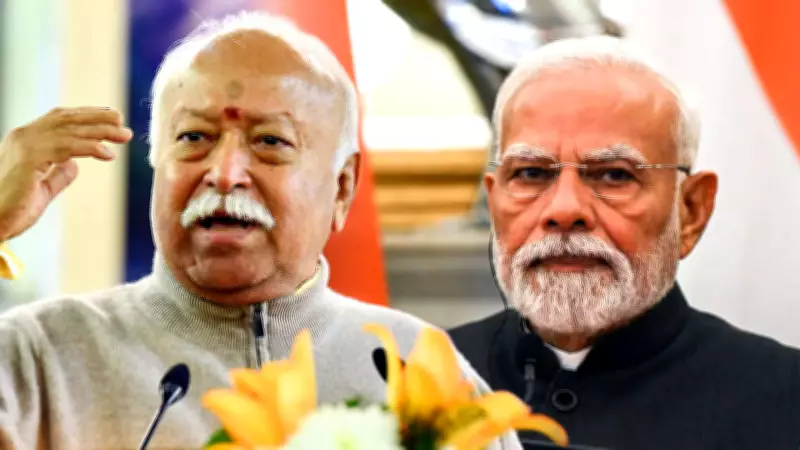
Mohan Bhagwat Credits RSS Grind For BJP's Success, Draws Line Between Sangh And Political Power
In a landmark address at the Rashtriya Swayamsevak Sangh (RSS) centenary event, chief Mohan Bhagwat reframed the narrative surrounding the Bharatiya Janata Party's (BJP) political dominance. He asserted that the era of "achhe din" (good days) emerged not from political authority but from the Sangh's decades of foundational groundwork.
Decades of Groundwork Over Political Power
Bhagwat emphasized that the RSS has never functioned as a pressure group and holds no interest in capturing political power directly. He stressed that the BJP remains organisationally separate from the Sangh, highlighting a clear distinction between ideological work and electoral politics.
"The real drivers behind political change are ideological persistence, volunteer discipline, and social unity," Bhagwat stated, underscoring the Sangh's role in shaping societal values rather than wielding governmental control.

Recalling the Ram Temple Movement
Reflecting on historical movements, Bhagwat pointed to the Ram temple issue as a prime example. He noted that unwavering commitment and long-term dedication eventually rewarded those who stood firm, illustrating how persistent ideological efforts can yield significant political outcomes over time.
Stirring Political Debate
The remarks have ignited a fresh wave of political debate across India. Critics are questioning the extent of the Sangh's influence on the BJP and government policies, arguing that such statements reveal deeper ideological underpinnings.
Conversely, supporters view Bhagwat's comments as a candid assertion of the long-term ideological labour that precedes electoral success. They see it as a validation of the RSS's role in building a robust foundation for the BJP's political achievements.
This discourse highlights the ongoing tension between ideological groundwork and political power in Indian politics, with Bhagwat's speech serving as a pivotal moment in clarifying the Sangh's stance on its relationship with the ruling party.