

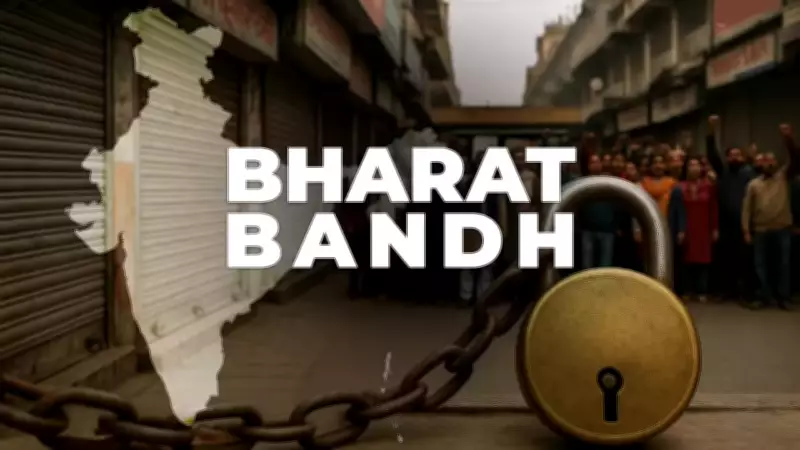
Nationwide Bharat Bandh Sparks Massive Worker Protests and Service Disruptions
On February 12, India witnessed a significant nationwide Bharat Bandh, with an estimated 30 crore workers expected to participate in a strike protesting what unions describe as anti-worker, anti-farmer, and pro-corporate policies of the central government. The bandh, organized by a coalition of 10 central trade unions and supported by farmers' groups, students, and youth bodies, aims to highlight critical issues including the four Labour Codes, the Electricity Bill 2025, the Seed Bill 2025, and concerns over recent free trade agreements.
Widespread Impact on Key Sectors
The strike has led to disruptions across various sectors, particularly affecting public sector banks, state transport services, government offices, industrial units, and rural employment schemes such as MGNREGA. However, essential services including hospitals, emergency services, private offices, metro services where permitted, and supply chains are anticipated to remain operational to minimize public inconvenience.
State-Specific Responses and Support
In Karnataka, schools are largely functioning normally despite the bandh, as announced by the Department of School Education and Literacy. Commissioner Vikas Kishor Suralkar authorized district commissioners to handle any untoward incidents. However, mid-day meal workers' participation in the strike has prompted schools to make alternative arrangements under the PM Poshan Shakti Nirman Project, affecting approximately 1.2 lakh kitchen workers in the state.

States like Odisha and Assam are expected to experience complete shutdowns, while Punjab is projected to see massive support with the Aam Aadmi Party actively backing the bandh alongside trade unions and farmer groups. The strike has garnered backing from the Samyukt Kisan Morcha (SKM), agricultural labour unions, students, and youth federations, emphasizing demands such as the restoration of the Old Pension Scheme and implementation of minimum wages for workers.
Key Demands and Political Backing
The protest centers on opposing policies perceived as detrimental to workers and farmers, with specific grievances against the VB-G RAM G Act 2025 and recent free trade agreements. Amarjeet Kaur, General Secretary of the All India Trade Union Congress (AITUC), highlighted that this strike surpasses previous nationwide protests in terms of worker participation, underscoring the growing discontent among labour groups.
Farmers' organizations have stressed the need to restore MGNREGA and oppose agricultural policies, adding to the bandh's momentum. The strike reflects a broader coalition of forces challenging government measures, with political parties like AAP lending their support to amplify the protest's impact across regions.
As the Bharat Bandh unfolds, authorities are monitoring the situation closely, with district officials in Karnataka directed to persuade mid-day meal workers against joining the strike. The bandh's success in mobilizing millions underscores the deep-seated issues facing workers and farmers in India, prompting calls for policy revisions and greater social protections.






