

Bharat Sevashram Sangha Expels Monk for Political Involvement
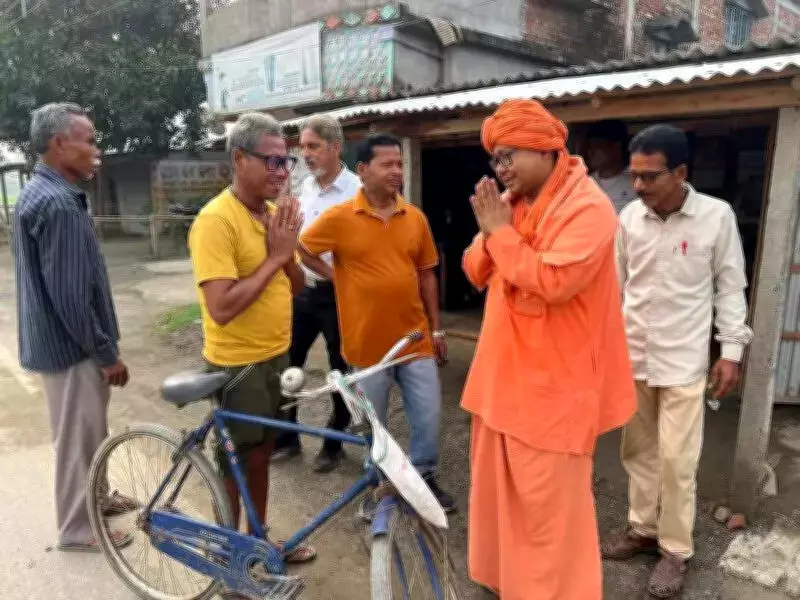
In a significant internal move, the Bharat Sevashram Sangha, a prominent religious and charitable organization, has officially expelled Swami Jyotirmayananda, widely recognized as Utpal Maharaj. This action follows his nomination as the Bharatiya Janata Party (BJP) candidate from the Kaliaganj constituency in Uttar Dinajpur, West Bengal. The expulsion was communicated through an internal note distributed to all monks within the order on Friday, citing a strict adherence to non-political principles.
Grounds for Expulsion: Falling into the Trap of Politics
The Sangha's general secretary, Swami Biswatmananda, articulated in a letter to the monks that Utpal Maharaj has walked into the trap of politics by aligning with a political party. He emphasized that the organization is dedicated solely to charitable and religious work, maintaining a firm stance against any political engagement. Neither a monk nor an ascetic can be part of any political activity, Swami Biswatmananda stated, explaining that such involvement deviates from the spiritual path and worldly renunciation expected of monks.
Upon learning of Maharaj's candidacy, the Sangha committee convened a meeting and unanimously decided to expel him. Swami Biswatmananda further clarified in a phone conversation that while the letter is an internal document not meant for public discussion, the organization unequivocally disapproves of monks entering politics, viewing it as a distraction from their religious duties.

Utpal Maharaj's Response and Justification
Utpal Maharaj, who was nominated by the BJP on March 16, responded to the expulsion by stating that he views it as a standard procedural step within the Sangha. He revealed that he had already resigned from his positions as secretary of Kaliaganj and Kunor and informed the authorities of his political intentions beforehand. I have no qualms over the steps taken by the Sangha, as it is the normal procedure within the organisation, he remarked during a press conference.
Maharaj defended his decision to enter politics by highlighting the pervasive corruption and deprivation affecting the state. He drew parallels to historical figures, noting that monks and yogis have historically engaged in societal reconstruction, from leaders like Netaji Subhas Chandra Bose and Rishi Aurobindo during the Independence movement to depictions in literature such as Anandamath and events like the Sanyasi Rebellion. Temples cannot remain immune when the city burns, he asserted, framing his political entry as a call to duty for nation-building.
Future Implications and Stance
Despite the expulsion, Utpal Maharaj remains resolute in his political journey, vowing to uphold his monastic principles while serving in public office. He expressed no ambiguity in his decision, considering it an integral part of contributing to society's betterment. I will remain in politics and maintain my monastic principles in the days to come, he affirmed, underscoring his commitment to blending spiritual values with political activism.
This incident underscores the ongoing tension between religious asceticism and political participation in India, sparking debates on the role of spiritual leaders in governance. As the election season progresses, Maharaj's case may influence broader discussions on ethics and engagement within religious communities.






