

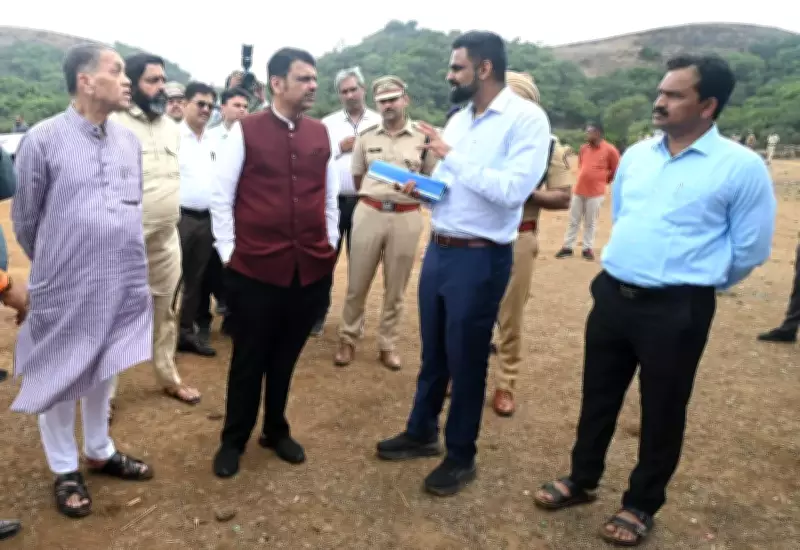
Pune: Chief minister Devendra Fadnavis on Saturday announced that nearly 90% of the redevelopment work at Bhimashankar, one of the 12 Jyotirlingas, would be completed before the 2027 Simhastha Kumbh Mela.
Fadnavis emphasized that the Bhimashankar Jyotirlinga holds immense significance for devotees across the country. He stated that the restoration of the temple complex, renovation of the sabhamandap, and precinct development works are progressing rapidly after inspecting the proposed Heritage Wadi project and temple precinct development works.
The chief minister noted that the project would preserve Bhimashankar’s cultural heritage while balancing development and environmental conservation. He expressed confidence that the number of devotees visiting the shrine would increase five to ten times in the future.

Fadnavis said the previously approved master plan is being implemented effectively with strong support from villagers. “The entire look of Bhimashankar will change through this project,” he added.
A key component of the project is the Heritage Wadi. Around 150 households are being relocated to a new settlement spread across 10.5 acres, about 150 metres from the existing village. Based on the principle of “restructuring rather than displacement,” the project aims to preserve social and cultural ties while improving living standards. “The village itself will become a tourism attraction. Tourists will come to see the Heritage Wadi too,” Fadnavis said, adding that the project would provide a new economic direction to residents.
District collector Jitendra Dudi said the project aims to provide planned rehabilitation to villagers, modern amenities to devotees, and improved living standards to residents. The Heritage Wadi will blend traditional architecture with modern infrastructure, including a heritage gateway, gram panchayat office, community hall, public utility centre, organised shops, roads, a bus station, and electric vehicles for senior citizens.
More than 40 commercial units have been planned to generate employment and self-employment opportunities. The new settlement will function as a service hub for devotees and tourists.
Officials said almost all residents around the temple precincts would be rehabilitated under a “zero-friction” model, enabling better crowd management, traffic regulation, sanitation, and civic services. Separate entry and exit roads are being developed to prevent congestion.
MLA Dilip Walse Patil, Babaji Kale, Dudi, temple trustees, and senior officials were present during the inspection.






