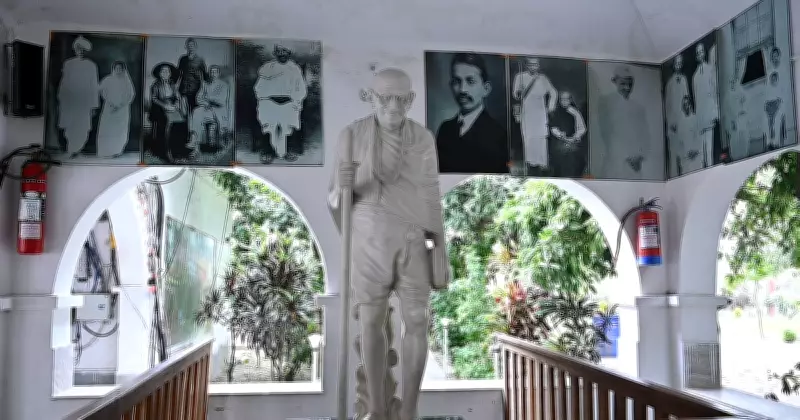
In the annals of India's freedom movement, a quiet village in Bihar holds a pivotal place as the starting point of Mahatma Gandhi's journey as a mass leader. Bhitiharwa, nestled in the Champaran region, witnessed Gandhi taking up the cause of oppressed indigo farmers, an act that not only sparked a peasant revolt but also fundamentally shaped the trajectory of India's struggle for independence.
The Genesis of Gandhi's Mass Leadership in Bihar
Gandhi's arrival in Bhitiharwa marked a turning point in his role within the Indian freedom struggle. Prior to this, his activism had been largely confined to South Africa and limited circles in India. However, in this serene village, he immersed himself in the plight of local farmers who were suffering under the exploitative indigo cultivation system imposed by British planters. This engagement transformed him into a leader who could mobilize the masses, setting a precedent for future campaigns across the nation.
The Indigo Farmers' Plight and the Peasant Revolt
The indigo farmers in Champaran, including those in Bhitiharwa, faced severe oppression under the tinkathia system, which forced them to dedicate a portion of their land to indigo cultivation for minimal returns. Gandhi's intervention involved conducting detailed surveys, gathering testimonies, and organizing peaceful protests. His efforts ignited a widespread peasant revolt that challenged British authority and highlighted the power of non-violent resistance. This movement not only alleviated the farmers' immediate hardships but also inspired similar agitations elsewhere in India.

Historical Artifacts and Memorials in Bhitiharwa
Today, Bhitiharwa preserves this rich history through various artifacts and sites from Gandhi's time. Key attractions at the local ashram include:
- A well used by Gandhi and his wife Kasturba Gandhi during their stay.
- A school established to promote education among the villagers.
- A bronze bell that served as a call to gatherings and meetings.
- A wheat grinder that symbolizes the simple, self-sufficient lifestyle advocated by Gandhi.
Additionally, the site features photographs and illustrations that vividly depict indigo cultivation and the peasant uprising, offering visitors a glimpse into the struggles that defined this era. These elements collectively serve as a testament to Gandhi's enduring legacy in the region.
The Lasting Impact on India's Freedom Struggle
The Bhitiharwa movement had profound implications for India's freedom struggle. It demonstrated the effectiveness of satyagraha (non-violent resistance) as a tool against colonial rule, a strategy Gandhi would later employ in larger campaigns like the Non-Cooperation Movement and the Salt March. By empowering peasants and integrating rural issues into the national discourse, Gandhi broadened the base of the independence movement, making it more inclusive and representative of India's diverse population.
In summary, Bhitiharwa is not just a historical site but a symbol of how grassroots activism can ignite national change. Gandhi's footsteps in this Bihar village sparked a revolt that reshaped India's path to freedom, leaving behind a legacy of resilience and justice that continues to inspire generations.