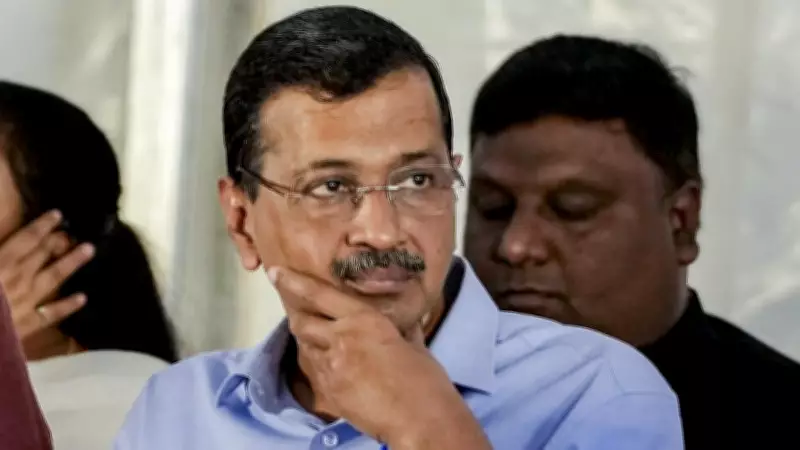
The Bharatiya Janata Party (BJP) has levelled fresh allegations against Delhi Chief Minister Arvind Kejriwal, accusing him of using private funds for the renovation of his official residence, which they have dubbed 'Sheesh Mahal'. The Aam Aadmi Party (AAP), however, has dismissed these claims as baseless and politically motivated.
BJP's Allegations
Speaking at a press conference, BJP leaders alleged that Kejriwal spent crores of rupees from private sources to upgrade his bungalow on Flagstaff Road. They claimed that the renovation included luxurious amenities such as a spa, a gym, and a swimming pool, making it a 'Sheesh Mahal' or a palace of mirrors. The party demanded a thorough investigation into the matter and accused Kejriwal of hypocrisy for preaching austerity while living lavishly.
BJP's Evidence
The BJP presented what they claimed were documents showing payments made to contractors and suppliers from accounts not linked to the government. They asserted that this amounted to a violation of the code of conduct for public officials. The party also questioned the source of the funds and demanded that Kejriwal provide a detailed explanation.

AAP's Rebuttal
In response, the AAP termed the allegations as 'fake' and 'malicious'. Party spokesperson said that the renovation was carried out with the Chief Minister's own salary and savings, and that all expenses were transparently declared. They accused the BJP of trying to divert attention from real issues like inflation and unemployment. The AAP also challenged the BJP to provide concrete proof of their claims.
Political Reactions
The controversy has sparked a war of words between the two parties, with both sides exchanging barbs. Political analysts believe that the issue could impact the upcoming assembly elections in Delhi, where the AAP is seeking a third consecutive term. The BJP is hoping to use the 'Sheesh Mahal' narrative to portray Kejriwal as disconnected from the common man.
Meanwhile, civil society groups have called for an independent audit of the renovation costs. They argue that regardless of the source of funds, the use of public property for personal luxury raises ethical questions. The Delhi government has not yet commented on the demand for an audit.