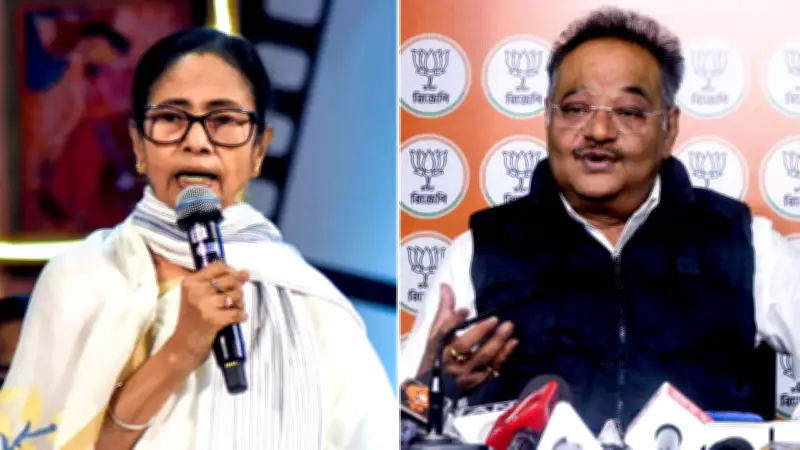
BJP Leader Clarifies Party's Position on Meat Sales Amid Political Controversy
Amid a growing political dispute regarding alleged restrictions on the open sale of fish and meat in Bihar, West Bengal BJP president Samik Bhattacharya made a significant statement on Thursday. He firmly asserted that people in Bengal maintain the freedom to consume the food of their choice, while clarifying that the Bharatiya Janata Party's opposition is specifically directed toward the open sale of beef.
Origins of the Controversy
The controversy ignited after senior leaders from the Trinamool Congress, including West Bengal Chief Minister Mamata Banerjee, launched criticism against what they described as a BJP-backed initiative targeting non-vegetarian dietary habits. These remarks were directly connected to a recent directive issued by the Bihar government, which implemented regulations concerning the open sale of meat products.
In response to these allegations, Bhattacharya provided a clear rebuttal. “People in Bengal will eat whatever they want to eat. Bengal will have its fish and meat,” he declared, explicitly rejecting claims by the TMC that suggested a proposed ban on fish and meat sales in open markets within the neighboring state.

Elaboration on the Bihar Directive
Elaborating further on the Bihar government's order, Bhattacharya emphasized that the BJP had not proposed any comprehensive or blanket restriction on meat sales. “They can never utter such a thing. Why should they? None will accept it. The TMC is twisting the comments,” he stated, accusing the opposition party of misrepresenting the situation.
According to reports from the news agency PTI, Bhattacharya further clarified that no such ban currently exists and that residents of either Bihar or West Bengal would not comply with such a measure if it were ever introduced. Drawing a critical distinction, he maintained that the BJP's official stand is strictly limited to opposing the open sale of beef. “Only that stuff you sell in the open will not be allowed by the BJP,” he reiterated, specifying the party's targeted concern.
Mamata Banerjee's Concerns and Allegations
Earlier, Chief Minister Mamata Banerjee had expressed deep concerns over the reported directive in Bihar, highlighting the potential adverse impact on the livelihoods of small-scale traders. “I came across a report about the Bihar deputy chief minister asserting that fish and meat cannot be sold in the open market. This is anti-people and condemnable,” she stated.
Banerjee posed a series of pointed questions regarding the practical implications of such regulations. “Can everyone sell meat and fish in shopping malls? What will happen to the majority of fish and meat sellers on the road? What about their livelihood issue? Such politics is deplorable.”
Addressing the issue once more, Banerjee escalated her allegations, warning, “If BJP comes to power, they would ban meat and fish in Bengal. I saw Bihar's deputy CM say that fish and meat can't be sold in open markets. Only those who have a licence can sell meat indoors.”
She further questioned the economic feasibility of such measures, noting, “So, will everyone sell meat and fish in shopping malls? Only a few have the economic strength to do so. Most fish sellers sell fresh fish on the streets here. This is how they earn their bread. I condemn this politics.”
Political Implications and Broader Context
This exchange underscores a significant political rift between the ruling TMC in West Bengal and the BJP, with dietary habits and food sales becoming a focal point of contention. The debate touches upon several critical issues:

- Cultural and dietary freedoms in different regions of India
- The economic impact on small traders and street vendors
- Political messaging and interpretation of government directives
- The distinction between general meat sales and specific beef sales in public discourse
As the controversy continues to unfold, it highlights the complex interplay between food policies, economic livelihoods, and political strategies in contemporary Indian politics. Both parties appear to be leveraging this issue to consolidate their respective voter bases and critique opposing ideologies.