

BJP Launches Substantive Motion Against Rahul Gandhi, Seeks Permanent Ban
In a significant escalation of political tensions, the Bharatiya Janata Party (BJP) has initiated a substantive motion against Leader of Opposition Rahul Gandhi in the Lok Sabha. This move comes in response to Gandhi's recent criticism of the government regarding a trade deal with the United States. The motion, a legislative tool designed to ensure discussion and decision-making if accepted, marks a direct counterattack by the ruling party.
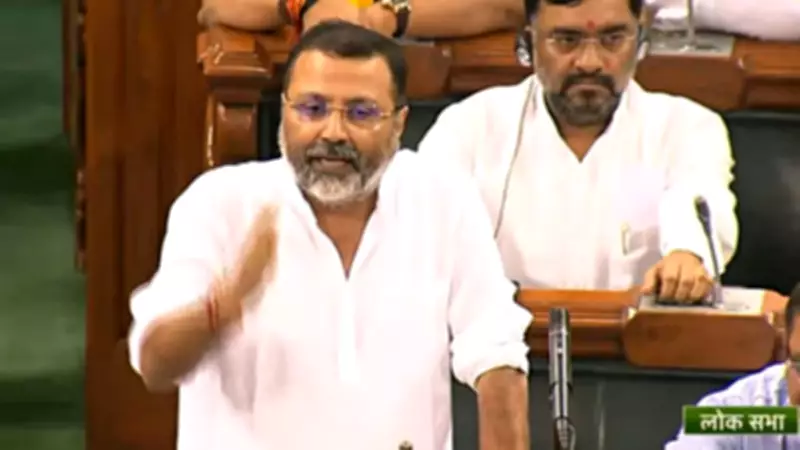
Nishikant Dubey's Allegations and Demands
BJP MP Nishikant Dubey, who filed the notice for the substantive motion, has made serious allegations against Rahul Gandhi. Speaking to reporters outside Parliament, Dubey claimed that Gandhi has engaged with organizations such as the Soros Foundation, the Ford Foundation, and USAID. He further asserted that Gandhi has traveled to countries including Thailand, Cambodia, Vietnam, and the United States to participate in what he described as "anti-India activities."
Dubey demanded the cancellation of Gandhi's parliamentary membership and called for a life-long ban on him from contesting elections. "He should be debarred from contesting the election for life time," Dubey stated emphatically. He clarified that this is not a privilege motion but a substantive motion, which requires a debate and a compulsory vote if admitted by the Speaker.

Government and Congress Responses
Government sources indicated that while no decision has been made on moving a privilege motion against Gandhi, they plan to seek the removal of certain unauthenticated parts of his speech from parliamentary records. Regarding references to Union Minister Hardeep Puri, sources noted that the minister will respond personally.
The Congress party, however, dismissed the BJP's actions as a "self-defence strategy." Congress leader K C Venugopal told The Indian Express, "The country has seen it and is convinced. If there was any response to that, it should have been a reply from the government. What Nishikant Dubey is doing is diverting attention, and it's the self-defence for the BJP." Venugopal argued that Gandhi had merely presented facts about the government, and the BJP's move is an attempt to shift focus.
Historical Context of Substantive Motions
Substantive motions are rarely used in the Lok Sabha. A notable precedent occurred in March 1997 when the Opposition BJP, under then-Lok Sabha Speaker P A Sangma, moved a substantive motion concerning the political situation in Uttar Pradesh and the role of then-Governor Romesh Bhandari. That motion aimed to recall the Governor, highlighting how such tools can address significant political issues through debate and voting.
Rahul Gandhi's Criticisms and Allegations
During the Budget discussion on Wednesday, Rahul Gandhi launched a sharp attack on the government, accusing it of compromising national interests in the trade deal with the US. He claimed that India had "buckled on tariffs, handed over our data, given up control over digital trade rules." Gandhi elaborated, "(There is) no data localisation, (there is) free data flow to the US, no source code disclosure, and a 20-year tax holiday. The most valuable asset of ours has been handed over." These remarks have fueled the current political showdown, with the BJP now seeking to hold Gandhi accountable through parliamentary procedures.
The unfolding situation underscores the deepening rift between the ruling BJP and the Opposition Congress, setting the stage for a contentious debate in Parliament. As both sides prepare their arguments, the outcome of this substantive motion could have far-reaching implications for Indian politics and parliamentary decorum.






