

BJP Condemns Former Pakistani Diplomat's Threatening Remarks Against India
The Bharatiya Janata Party (BJP) issued a sharp rebuke on Sunday, stating that recent comments by former Pakistani diplomat Abdul Basit demonstrate that Pakistan "cannot survive without terrorism." The political party's strong reaction came after Basit, who previously served as Pakistan's envoy to India, made provocative statements in an interview regarding hypothetical military scenarios.
Basit's Controversial Remarks Spark Outrage
In his interview, Abdul Basit outlined a worst-case scenario where the United States might attempt to destroy Pakistan's nuclear capabilities. He suggested that in such a situation, Pakistan would have no choice but to strike Indian cities, specifically mentioning Mumbai and New Delhi as potential targets.
"Suppose there is a scenario where the US views our nuclear programme in a negative light or tries to destroy our nuclear capability," Basit stated. "Even if the US is not within our nuclear range, what options do we have? India. We would not have to do anything else. Even if we do not have the range to target the US, we would have to strike India's Mumbai and New Delhi without thinking."

BJP's Strong Response to the Threat
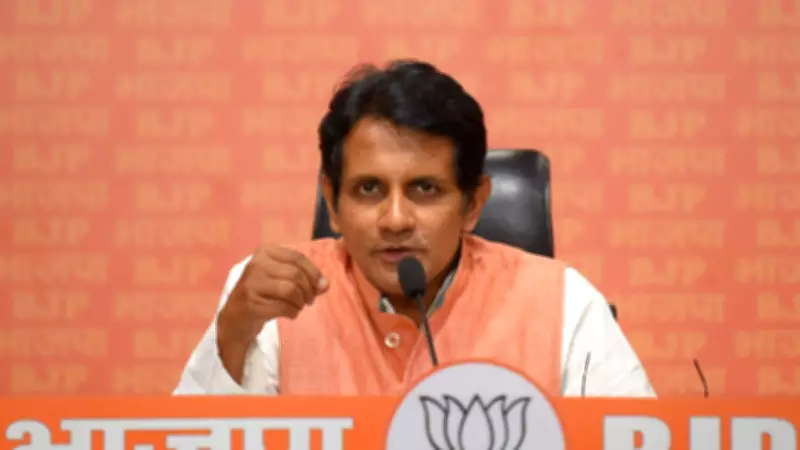
Reacting to these comments, BJP National Spokesperson Tuhin Sinha told IANS that Basit's threat to "blow up Delhi and Mumbai with bombs from Pakistan" reveals that Pakistan remains deeply unsettled by previous military operations. "It has lost its mental balance," Sinha asserted about Pakistan's leadership.
Sinha went further to characterize Pakistan as a "terrorist state" whose very nature is intertwined with terrorism. "It is a terrorist state and now we don't even have to say it," he declared. The BJP spokesperson referenced previous threats from Pakistani military officials, including last year's statement by Pakistan Army Chief Asim Munir about targeting oil refineries in Jamnagar, India.
"Now, the country's former envoy has used this kind of language," Sinha continued. "It shows that terrorism is ingrained in their nature. Pakistan can't survive without terrorism."
Regional Context and Broader Implications
Basit's controversial comments emerged against a backdrop of heightened tensions in the Middle East, particularly concerning Iran's nuclear program. The region has experienced escalating conflict following joint US-Israeli strikes on Tehran in late February, with the situation now entering its third week of sustained hostilities.
The BJP's strong condemnation reflects ongoing diplomatic strains between India and Pakistan, with terrorism remaining a central point of contention in bilateral relations. The party's characterization of Pakistan as fundamentally dependent on terrorism underscores the deep-seated security concerns that continue to define the relationship between the two neighboring nations.
This exchange of rhetoric occurs as global attention remains focused on Middle Eastern conflicts, with former US President Donald Trump having issued warnings to Iran regarding the Strait of Hormuz. The intersection of regional tensions and historical India-Pakistan animosities creates a complex geopolitical landscape where diplomatic statements carry significant weight and potential consequences for regional stability.






