

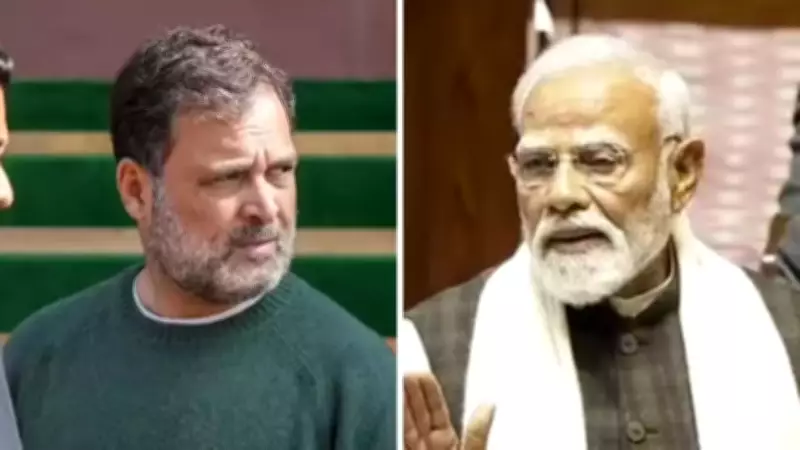
BJP Mounts Forceful Counterattack Against Rahul Gandhi's Allegations in Lok Sabha
In a heated parliamentary session on Wednesday, the Bharatiya Janata Party (BJP) launched a comprehensive and aggressive rebuttal against Congress leader Rahul Gandhi's accusations regarding the government's handling of a trade agreement with the United States. The ruling party categorically dismissed Gandhi's claims as "a blatant lie" and portrayed him as a leader driven by bitterness and hatred, willing to harm the nation's interests to target the ruling alliance.
Finance Minister Nirmala Sitharaman's Historical Countercharge
Finance Minister Nirmala Sitharaman delivered a pointed response, turning the tables on the Congress by highlighting historical precedents. She asserted that it was during previous Congress-led governments that India's interests were compromised before international organizations like the World Trade Organization (WTO). Sitharaman specifically referenced the UPA government's actions at the Bali ministerial conference, where she claimed farmers' interests were sacrificed in agriculture negotiations.
"The Congress government not only surrendered India's position but effectively sold out the interests of poor farmers and vulnerable sections of society," Sitharaman stated emphatically. She also cited the Sharm el-Sheikh Joint Statement as evidence of the Manmohan Singh administration diluting India's sovereignty and security stance in engagements with Pakistan.

Parliamentary Affairs Minister's Fiery Response
Parliamentary Affairs Minister Kiren Rijiju reacted with particular intensity to Gandhi's characterization of the trade agreement as a "sellout" by Prime Minister Narendra Modi. "No 'mai ka laal' has the audacity to make such baseless allegations against our Prime Minister," Rijiju declared, using a Hindi phrase meaning "son of a mother" to emphasize his point. He praised Modi as "India's strongest Prime Minister" and challenged Gandhi to substantiate his claims with evidence.
Rijiju further warned that a privilege motion might be initiated against the Congress leader for making false allegations in Parliament. "You are levelling serious charges without any proof. You are making wild allegations. Please make substantive points if you have any," he demanded during the session.
BJP's Multi-Pronged Defense Strategy
The BJP's response was coordinated across multiple fronts:
- Information and Broadcasting Minister Ashwini Vaishnav addressed concerns about data ownership, asserting that India's legal framework provides robust protection against any compromise in trade agreements.
- Former minister Anurag Thakur attributed Gandhi's aggressive stance to successive electoral defeats, claiming they had filled him with hatred toward parliamentary institutions, constitutional bodies, and ultimately India itself.
- Thakur further alleged that Gandhi himself was influenced by "visible and invisible foreign players" working against India's interests, directly countering Gandhi's accusations about government capitulation to US pressure.
External Validation and Social Media Engagement
The BJP found additional support from an unexpected quarter—a fact-sheet released by the Trump administration that reportedly showed India secured more favorable terms in the agreement than initially suggested. This external validation strengthened the government's position during the debate.
BJP chief spokesperson Anil Baluni extended the counterattack to social media platform X, accusing Gandhi of deliberately misrepresenting documents including the budget and trade agreement to mislead both Parliament and the public. "Rahul has once again chosen theatrics over truth. Deliberately misrepresenting the budget weakens democratic debate and disrespects the intelligence of the people of India," Baluni posted.
The parliamentary exchange highlighted the deepening political divisions over India's international engagements, with the BJP presenting a united front to defend its trade policies while questioning the opposition's motives and historical record.






