

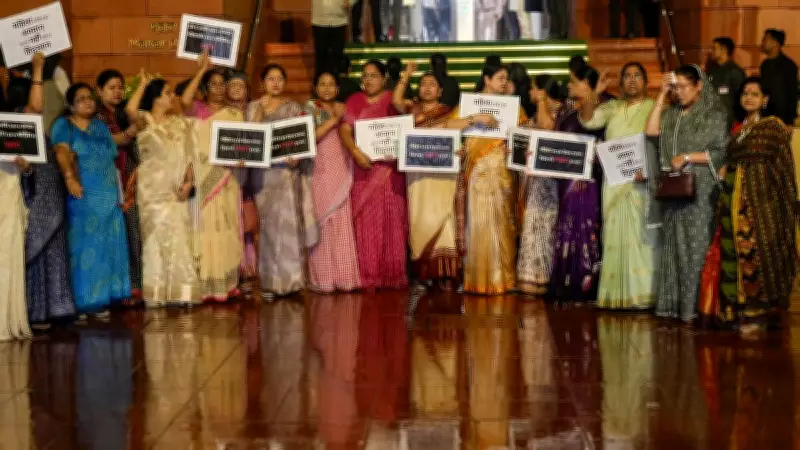
BJP Women Cadre March to Rahul Gandhi's Residence in Major Protest
In a significant political demonstration, women workers of the Bharatiya Janata Party (BJP) organized a protest march to the residence of Congress leader Rahul Gandhi in Delhi on April 18, 2026. The march, which began in the morning, saw a large gathering of party cadre voicing strong allegations against the opposition.
Allegations of Opposition Stance on Women's Rights
The protesters carried placards and chanted slogans, accusing the opposition, particularly the Congress party, of not supporting women's rights. "The opposition does not want women to have rights," was a key message echoed throughout the event. This claim formed the central theme of the protest, with participants asserting that political rivals are hindering progress on gender equality issues.
High-Profile Leaders Join the Demonstration
The protest was bolstered by the presence of several prominent BJP leaders. Delhi Chief Minister Rekha Gupta actively participated, addressing the crowd and reinforcing the party's commitment to women's empowerment. Union Minister Raksha Khadse also joined the march, highlighting the national significance of the issue.

Other notable figures included BJP State President Virendra Sachdeva and MP Manoj Tiwari, who stood in solidarity with the women workers. Their involvement underscored the party's unified stance on the matter, with leaders from various levels of the organization coming together to support the cause.
Details of the Protest March
The march proceeded peacefully through the streets of Delhi, culminating at Rahul Gandhi's residence. Organizers ensured that the protest remained orderly, with participants following standard protocols for such demonstrations. The event drew attention from local media and onlookers, amplifying the BJP's message on women's rights.
According to reports, the protest was scheduled to last for several hours, with speeches and symbolic actions planned to emphasize the demands. The timing, on April 18, 2026, was noted as strategically chosen to coincide with ongoing political debates in the national capital.
Political Context and Implications
This protest comes amid heightened political tensions in India, with the BJP and Congress often clashing over policy and ideological differences. The focus on women's rights is a recurring theme in Indian politics, and this march aimed to position the BJP as a champion of gender equality while criticizing the opposition.
Observers suggest that such demonstrations are part of broader electoral strategies, especially with state and national elections on the horizon. By mobilizing women workers, the BJP seeks to strengthen its grassroots support and highlight its pro-women initiatives.
The protest also reflects the active role of women in political activism, with BJP women cadre taking a leading role in organizing and participating in the march. This underscores the party's efforts to promote women's involvement in public life and decision-making processes.
As the protest concluded, leaders reiterated their call for the opposition to reconsider its stance on women's issues, urging for bipartisan support on legislation aimed at enhancing women's rights and safety. The event marks a notable moment in the ongoing political discourse surrounding gender equality in India.






