

BJP Intensifies Women's Reservation Campaign Across Uttar Pradesh
In a swift political maneuver, the Bharatiya Janata Party (BJP) has transformed the legislative setback over the Women's Reservation Bill into a strategic opportunity. The party has launched an intense statewide campaign in Uttar Pradesh, mobilizing its extensive women's organizational network to target the Opposition as anti-women. This move aims to galvanize public support and shift the narrative in favor of the Nari Shakti Vandan Adhiniyam.
CM Yogi Adityanath Leads High-Profile Protest in Lucknow
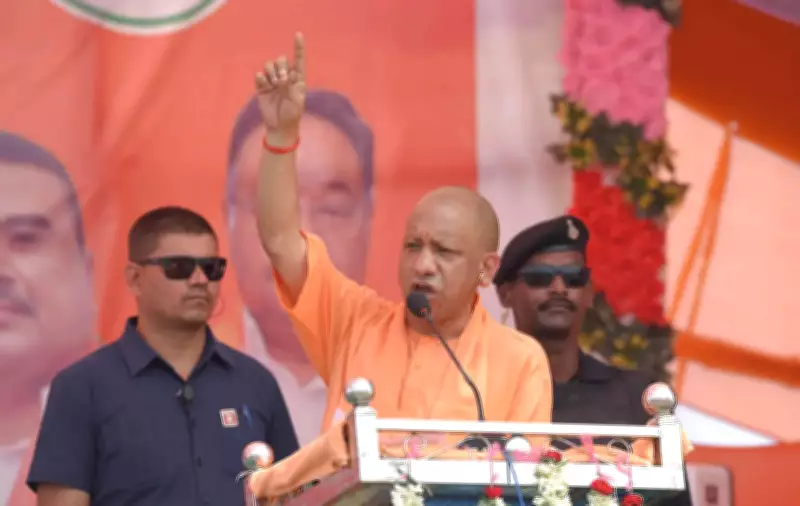
Chief Minister Yogi Adityanath will personally spearhead the campaign, leading a significant protest in Lucknow on Tuesday. He will undertake a foot march from his official residence at 5 Kalidas Marg to the Vidhan Bhawan, joined by his deputies Keshav Maurya and Brajesh Pathak, UP BJP chief Pankaj Chaudhary, and senior party functionaries. Women ministers, MPs, and MLAs are also set to participate, underscoring the party's commitment to women's empowerment.
Statewide Public Awareness Drive and Grassroots Mobilization
Under the chief minister's directives, a large-scale public awareness campaign will be conducted across Uttar Pradesh to champion the Women's Reservation Bill. This initiative will directly challenge the Opposition among the populace, presenting women's reservation as the right of half the population. A series of programs will be organized from block levels to district headquarters, involving women's groups, self-help groups, and various social organizations to transform this campaign into a mass movement.

Through rallies, public meetings, and dialogue programs, the BJP aims to expose the true face of the opposition, emphasizing that women's empowerment is a top priority for the double-engine government. The party has planned protests at regional, district, and mandal levels, leveraging Uttar Pradesh's organizational structure of six regions, 98 organizational districts, and 1,918 mandals.
Strategic Objectives and Political Implications
Party sources reveal that the protests are designed to achieve four key objectives: keeping the issue alive in public discourse, exerting moral pressure on Opposition parties, projecting the BJP as the sole party dedicated to women's political empowerment, and energizing party workers following the legislative setback. Additionally, the BJP government is considering a special session of the UP Assembly on April 30 to further sharpen the issue.
The state unit has directed the UP BJP Mahila Morcha to extensively mobilize cadres. Rama Singh, Morcha state secretary, stated that demonstrations will initially be held at key centers in the party's six organizational regions—West UP, Braj, Awadh, Kanpur, Kashi, and Gorakhpur—starting with Lucknow and Varanasi in the first phase. These protests will subsequently expand to district and mandal levels to expose the Opposition's anti-women stance at the grassroots.
Significance in National Electoral Strategy
Political observers highlight that developments in Uttar Pradesh carry added significance, as the state sends the highest number of MPs to the Lok Sabha and remains central to the BJP's national electoral strategy. Women voters have emerged as a decisive constituency in recent elections, bolstered by the BJP's emphasis on women-centric welfare schemes. This campaign is poised to reinforce the party's appeal among this key demographic ahead of future polls.






