BJP's Punjab Ambitions: A Mountainous Electoral Challenge
For the Bharatiya Janata Party (BJP), Punjab represents a formidable electoral peak that may prove difficult to scale. The state's all-embracing cultural fabric appears resistant to the BJP's agenda, which often hinges on religious divisions. This dynamic sets the stage for a complex political battle in the upcoming Assembly elections.
A Spectacle of Symbolism and Strategy
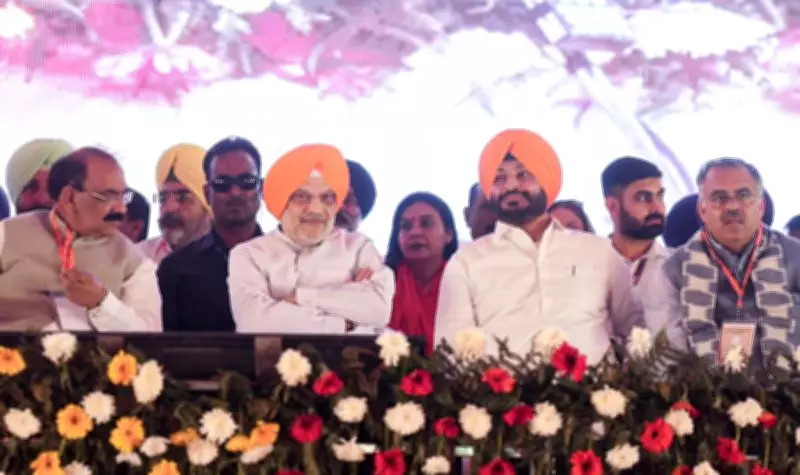
It was a notable sight to witness Amit Shah donning a turban and delivering a popular Sikh greeting at his highly publicized Moga rally on March 14. Similarly, Haryana Chief Minister Nayab Singh Saini and Prime Minister Narendra Modi frequently appear in turbans during Sikh gatherings. However, such attempts to charm the Sikh community through symbolic gestures may be misguided, according to political observers.
The BJP's decision-making process is centralized, with even media interviews requiring approval from the top leadership. Amit Shah's announcement that the party will contest the Punjab elections alone, without consulting local leaders like Sunil Jakhar and Captain Amarinder Singh, underscores this top-down approach. These former Congress stalwarts had publicly advocated for an electoral alliance with the Shiromani Akali Dal (SAD).

Divisive Issues and Electoral Realities
In the absence of deeper engagement with local concerns, the Home Minister turned to divisive topics such as conversions. Proposing an anti-conversion law as part of the BJP's agenda for change is unlikely to resonate electorally in Punjab, where conversion is not a pressing issue for ordinary citizens. Poor individuals converting to Christianity for minor financial gains do not pose a significant threat to society or the state.
Punjab's inherently secular temperament means that the BJP's strategy of winning elections through religious divisions may not be easily digested. Historically, Punjabis have voted to oust arrogant leaders, often lacking a strong party of choice. The Aam Aadmi Party's (AAP) landslide victory in the last election was more a punishment for the misgovernance of the Congress-SAD-BJP combine than an endorsement of AAP's promises.
Caste Calculations and Dalit Outreach
According to Sikh political thinker Ajmer Singh, the BJP may attempt to replicate its Haryana strategy in Punjab by dividing Sikh Jat votes and uniting Hindu, Scheduled Caste (SC), and Other Backward Class (OBC) votes. This plan is supported by gestures such as awarding Padma Shri to the head of Dera Sachkhand Ballan and Prime Minister Modi's visit to pay tributes to Guru Ravidas in the Dalit heartland.
Dalits constitute 32% of Punjab's electorate and play a decisive role in 23 of the 117 Assembly seats across Jalandhar, Kapurthala, Nawanshahr, and Hoshiarpur districts. Ravidassias form a major segment of this group, and the BJP is heavily betting on their support. Additionally, the frequent parole releases of convicted dera chief Ram Rahim, who has a substantial following in Punjab's Malwa region, lend support to this electoral strategy.
Challenges in Uniting Divided Votes
Despite these efforts, the BJP's Dalit outreach may fall flat. SC and OBC voters in Punjab remain fragmented, supporting various political parties, which explains why the Bahujan Samaj Party (BSP) has struggled to gain traction in the state. Replicating the BJP's Haryana success in Punjab is fraught with challenges, as the odds are heavily stacked against it.
Sikhs generally maintain a distance from the BJP due to its incendiary politics, communal agenda, and patronage of deras. The dominant Sikh philosophy of sarbat da bhala (welfare of all) aligns with Punjab's secular temperament. Even during periods of heightened militancy, there was no serious communal divide despite grave provocations.
Economic Policies and Farmer Concerns
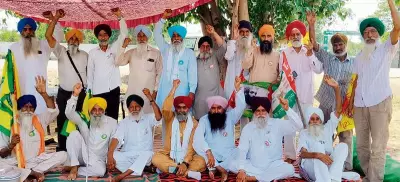
Farmers and farm workers are unlikely to support the BJP's power-grab attempt. The year-long farmer protests against three controversial farm laws placed the BJP leadership on the defensive. Now, issues such as the Seeds Bill, the Electricity Bill, and trade deals with the US have reignited agitation among farmers.

At the Moga rally, Amit Shah could have addressed these pressing concerns but instead focused on non-issues. The BJP's national economic policies, which have led to unprecedented inequality and wealth accumulation by a handful of crony capitalists, offer little hope or comfort to Punjab. While promoting religious polarization and social anxieties may temporarily mask economic distress, truth ultimately prevails.
Lack of Vision for Punjab's Future
During their visits to Punjab, the Modi-Shah duo did not address core state issues nor present a well-thought-out plan to extricate Punjab from its current predicament. Questions remain: Does the BJP have a vision to save Punjab from fiscal vandalism, for which past ruling parties gained notoriety? Can it help lighten the state's debt burden, accumulated through overspending, reckless borrowing, and mismanagement of benefits systems? Or, like other parties, does it prioritize short-term electoral wins over long-term solutions?
Organizational Strength and Electoral Machinery
Despite numerous handicaps and a mountain of hurdles, the BJP's push in Punjab should not be underestimated. The party's organizational skills, financial muscle, backing from the Rashtriya Swayamsevak Sangh (RSS), and a favorably inclined Election Commission provide unmatched advantages. Political strategies and caste calculations often yield desired results, making the BJP a formidable opponent.
However, the persistent RSS narrative that Sikhs are part of the Hindu community continues to annoy Sikhs, as evidenced by recent protests at Panjab University against attempts at saffronization of the campus. Mixing politics with religion, such as recalling the sacrifices of Guru Tegh Bahadur and the Sahibzadas or claiming credit for the Kartarpur Sahib corridor, does little to bridge this divide.
In conclusion, while the BJP's electoral machine is powerful, Punjab's secular ethos, divided electorate, and pressing economic issues present a tough mountain to climb. The state's voters are disillusioned with AAP but not sufficiently angry to oust it, limiting the BJP's room for manoeuvre. As the election approaches, the BJP must navigate these complex dynamics to make any significant inroads in Punjab.