

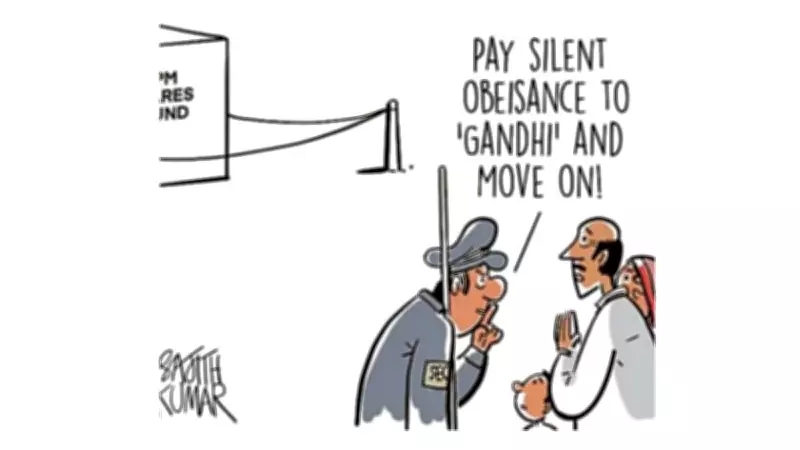
Deccan Herald Cartoon on Gandhi Obeisance Stirs Public Debate
A recent cartoon published by Deccan Herald, titled "Paying Obeisance to Gandhi," has ignited significant controversy and criticism across various media platforms and social circles in India. The illustration, which depicts a scene of homage to Mahatma Gandhi, has been scrutinized for its artistic interpretation and perceived implications in the current political climate.
Details of the Controversial Cartoon
The cartoon, featured in the opinion section of Deccan Herald, portrays individuals or figures engaging in an act of obeisance or reverence towards Mahatma Gandhi. While the specific visual elements vary in descriptions, it is reported to include symbolic imagery that some viewers interpret as a commentary on contemporary political practices or societal attitudes. The artwork aims to reflect on Gandhi's enduring legacy and how it is invoked or respected in modern times, but its execution has led to mixed reactions.
Critics argue that the cartoon may trivialize or misrepresent the profound respect accorded to Gandhi, a key figure in India's independence movement and a global icon of non-violence. They contend that such depictions could undermine the seriousness of his teachings and the historical context of his contributions. Supporters of the cartoon, however, defend it as a legitimate form of satirical expression, intended to provoke thought and discussion on how political symbols are used in public discourse.

Broader Implications for Media and Politics
This incident highlights the ongoing tensions between artistic freedom and responsible journalism in India. Cartoons have long been a tool for social and political commentary, but they often walk a fine line between humor and offense, especially when dealing with revered national figures like Gandhi. The controversy raises questions about the boundaries of satire and the role of media in shaping public perception of historical icons.
In recent years, similar debates have emerged around depictions of political leaders and cultural symbols, reflecting a broader societal divide over freedom of expression versus cultural sensitivity. The Deccan Herald cartoon case adds to this discourse, emphasizing the need for nuanced approaches in media representation.
Public and Expert Reactions
Reactions to the cartoon have been polarized. Some social media users and commentators have expressed outrage, calling for apologies or retractions, while others applaud the newspaper for fostering critical dialogue. Experts in media studies and political science note that such controversies often stem from differing interpretations of symbolism and context.
- Critics view the cartoon as disrespectful and potentially inflammatory.
- Supporters see it as a valuable critique of political posturing.
- Media analysts stress the importance of context in understanding satirical content.
The debate underscores how visual media, including cartoons, can influence public opinion and spark important conversations about history, politics, and ethics in India.






