

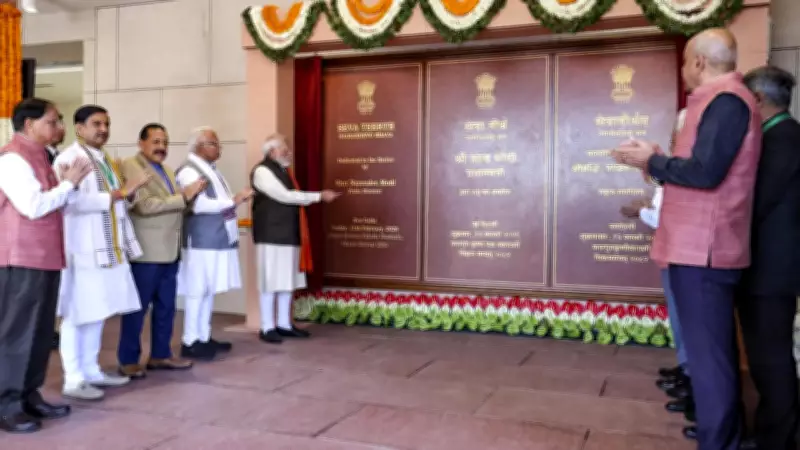
PM Modi Inaugurates Seva Teerth: A New Era for India's Governance
Prime Minister Narendra Modi inaugurated the new Seva Teerth complex in New Delhi on February 13, 2026, marking a significant transformation in India's administrative framework. This state-of-the-art facility now consolidates the Prime Minister's Office, the National Security Council Secretariat, and the Cabinet Secretariat under a single roof for the first time in the nation's history.
Unified Administrative Hub Replaces Fragmented System
Seva Teerth replaces the previous arrangement where these critical offices operated from separate buildings scattered across the capital. By bringing them together, the government aims to streamline coordination, accelerate decision-making processes, and foster a more integrated and efficient governance structure. This consolidation is expected to reduce bureaucratic delays and enhance policy implementation.
Kartavya Bhavan Also Inaugurated for Key Ministries
Alongside Seva Teerth, Prime Minister Modi inaugurated Kartavya Bhavan 1 and 2. These new buildings will house major ministries including Finance, Defence, Health, Education, Agriculture, and Law. This move consolidates offices that were previously dispersed throughout the Central Vista area, further centralizing administrative functions and improving inter-ministerial collaboration.

Citizen-Centric Design and Sustainable Infrastructure
The Seva Teerth and Kartavya Bhavan complexes feature digitally integrated offices, centralized reception areas, and dedicated public interface zones, designed to prioritize efficiency, transparency, and easier citizen engagement. Built under 4-Star GRIHA standards, the infrastructure incorporates renewable energy systems, water conservation measures, and advanced waste management solutions. Enhanced security is ensured through smart access controls, surveillance networks, and modern emergency systems.
Symbolic Shift from Colonial Legacy
The naming of Seva Teerth is part of a broader initiative to move away from colonial-era symbols. This follows earlier renamings such as Rajpath to Kartavya Path and Race Course Road to Lok Kalyan Marg. The government emphasizes that the new names reflect core values of service, duty, and public welfare, aligning with contemporary national identity.
Immediate Policy Actions and Future Vision
Shortly after shifting to Seva Teerth, Prime Minister Modi signed key policy approvals focused on women, youth, farmers, and vulnerable citizens. Notable decisions included the launch of the PM RAHAT scheme and doubling the target for Lakhpati Didis to six crore by 2029. Additionally, the Prime Minister cleared the Startup India Fund of Funds 2.0 with a Rs 10,000 crore corpus to support innovation and deep-tech startups. Describing the moment as historic, Modi stated that decisions made at Seva Teerth will shape India's journey toward becoming a developed nation by 2047.
The inauguration of Seva Teerth represents a major step in modernizing India's governance infrastructure, aiming to create a more responsive and cohesive administrative environment for the future.






