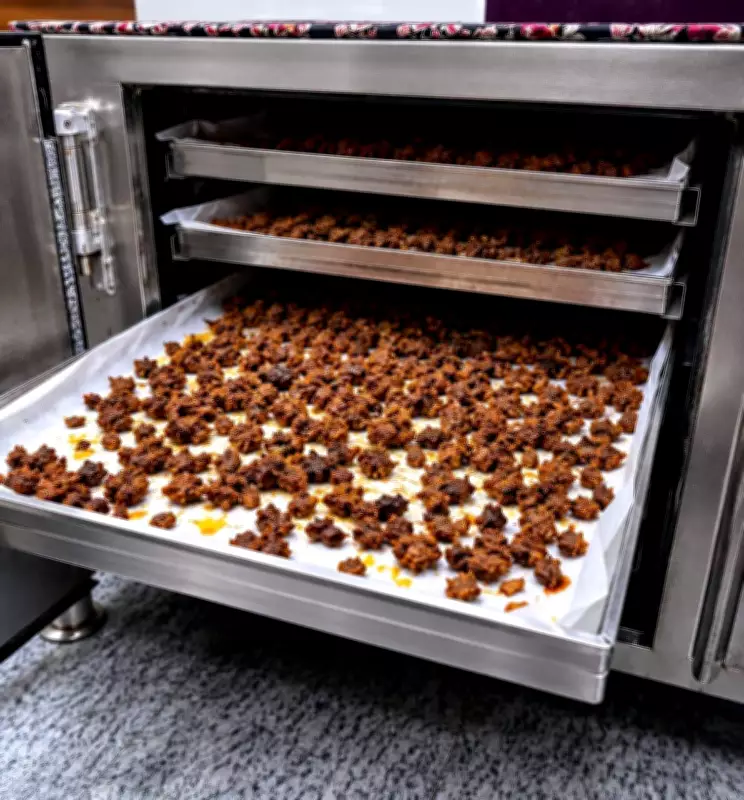
As the number of Indian students studying abroad surges past 14 lakh, a curious business has emerged: food dehydration and freeze-drying. Anxious mothers, concerned their children might abandon their eggless upbringing, now routinely send home-cooked meals via specialized companies that have sprung up in Mumbai, Ahmedabad, Sonipat, and Delhi. These firms, such as Avarya and DryM Foods, often organize courier services, packaging branded 'home-style' and 'mummy wala khana'.
How Food Dehydration Works
Shreya Shah from Mumbai explains the science: "Moisture leads to microbial growth that causes food spoilage. When we remove moisture, food can last for a year or more without preservatives." She requires at least 12 hours to dehydrate food, depending on water content. One customer was so particular about freshness that she insisted the entire batch be processed before sunset.
Parental Concerns Drive Demand
Parul Patel, a Navi Mumbai resident, regularly sends food to her son, who is doing his medical residency in a rural town in South Carolina, USA. "He comes home late and tired, where will he manage to cook? I know how much he loves my home food," she says. Many residents there have never sampled Thai curry, let alone Indian dishes.

Dehydration vs. Freeze-Drying
Some vegetables don't dehydrate well. Potatoes receive mixed reviews as texture changes upon rehydration. Paneer cubes become chewy, but shredded paneer works well. Pav bhaji and lentils like sambhar are staples. Parul Patel researched and found freeze-drying superior for taste, texture, and nutrition. This year, she sent aamras (mango pulp) via freeze-drying, which retains the Alphonso aroma better than dehydration, which turns it into a leathery sheet.
Freeze-drying, or lyophilization, was developed by NASA for astronauts. It is more expensive than dehydration but preserves flavor and nutrients. Dehydration uses heat, while freeze-drying freezes food solid, then places it in a vacuum chamber where ice turns directly into vapor.
Business Growth and Trends
Amit Chheda, proprietor of My Taste My Meal in Mumbai, started with a courier business. Encouraged by doctors with children abroad, he began couriering dehydrated food. Success, especially during Covid, led him to create his own brand. He later invested in a freeze-drying machine that processes 200 kg of food daily during peak seasons (April-May and August-September). Business grows 20% annually. Primary destinations are the US, Canada, and the UK, but recently parents send packages to the Netherlands and Germany. One family even ordered dehydrated daal-rice for elderly vegetarian parents during Hajj. The only items they avoid are sugary items, as sugar gets stuck.
Mixed Reactions
Food writer Pushpesh Pant finds the trend "absurdly amusing." He says, "Dehydrated daal-dhokli? Avial? Amti? Alu vadiyan? The thought is revolting. I draw the line at some special heirloom pickles and sweets with a long shelf life."