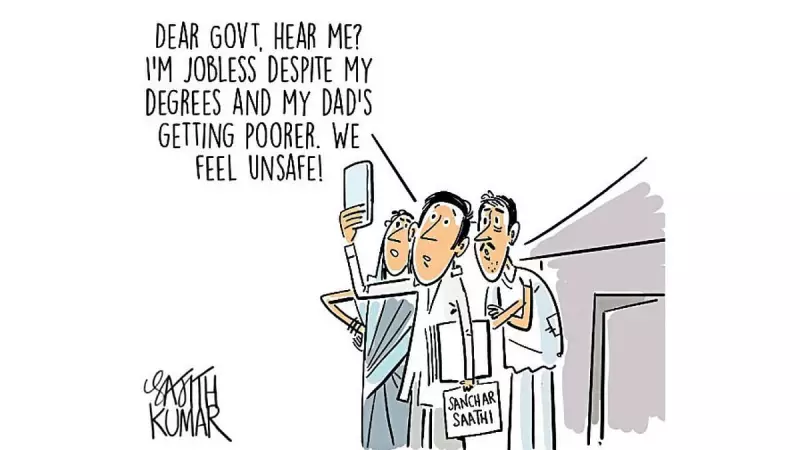
A recent editorial cartoon published by Deccan Herald has powerfully encapsulated a growing sentiment of public frustration towards the government's perceived inaction and lack of dialogue. Created by the renowned cartoonist Satish Acharya, the artwork titled 'Dear Govt, Hear Me' serves as a stark visual commentary on the communication gap between the governing and the governed.
The Visual Cry for Attention
The cartoon's central figure is a common citizen, depicted with a look of desperate urgency, trying to project his voice towards a distant, imposing government building or figure. The core message is simple yet profound: the plea of the ordinary person is not being heard by those in power. Acharya, known for his incisive and timely political commentary, uses this imagery to highlight a critical issue in contemporary governance—the breakdown of effective communication and responsiveness to public concerns.
While the cartoon does not reference a single specific event, it resonates with a series of ongoing public grievances across various sectors. These include issues related to economic distress, unemployment, agricultural protests, and social unrest. The genius of the cartoon lies in its universality; it speaks for every citizen who has ever felt ignored or sidelined by bureaucratic and political machinery.

More Than Just a Drawing: A Social Statement
Editorial cartoons like Acharya's are not mere illustrations; they are a form of journalism and social critique. They distill complex socio-political climates into a single, accessible image that can provoke thought and discussion. 'Dear Govt, Hear Me' functions as a mirror to society, reflecting a collective anxiety and a yearning for acknowledgment.
The power of this cartoon stems from its emotional core. It moves beyond policy criticism to tap into the human experience of neglect. The citizen is not shown protesting violently or arguing aggressively; instead, the depiction is of a heartfelt, almost pleading attempt to communicate. This nuance makes the commentary even stronger, suggesting that the public's initial approach is one of seeking dialogue, not confrontation.
Public Reaction and the Role of Satire
Such cartoons often become a focal point for public discourse, shared widely on social media as people see their own feelings validated in the art. They act as a safe, yet potent, avenue for expressing dissent and holding power to account in a democracy. The work of cartoonists like Satish Acharya is vital in a healthy democracy, providing a critical check through satire and visual metaphor.
The underlying question the cartoon poses is about the essence of democratic governance. A government's legitimacy is derived from the people, and a fundamental aspect of this relationship is listening. When this channel appears blocked, it leads to disillusionment and a sense of alienation. Acharya's cartoon is a timely reminder of this basic democratic principle.
In conclusion, Satish Acharya's 'Dear Govt, Hear Me' in Deccan Herald is more than a daily cartoon; it is a significant cultural artifact of our times. It captures a pervasive mood and serves as an important prompt for introspection about the state of citizen-government engagement in India today. The silent plea of the cartoon's subject echoes in the minds of millions, waiting for a response.